Sections




Latest News

Die-Cut vs. Waterjet Cut Silicone Gaskets
What’s the best choice for your production run? Selecting the right material is critical for manufacturing high-performance seals, but how...


Rolling Stock Networking: Connect with CB Frost at RSN 2026
At CB Frost & Co, we don’t believe in waiting around when a great opportunity knocks. That is exactly why...
Useful links


© 2024 CB Frost • All Rights Reserved • A Bluechilli Website
Rubber
Rubber
An Introduction to CB Frost’s Solid Rubber
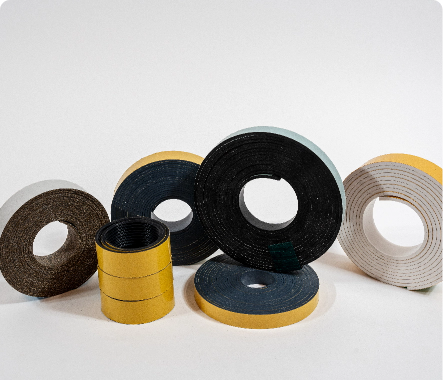
At CB Frost, we offer an array of rubber materials –
Commercial grades include – Neoprene, Natural, Nitrile, EPDM, Commercial Insertion (1ply), Ribbed Matting, General Purpose Silicone, Rogers Bisco® HT6240 and Viton
British Standards Grades include – BS1154 Natural, BS2751 Nitrile and BS2752 Neoprene
Cork grades include – Nit/Neo blend and SBR/Nit blend
FR Grades include – LSLT (Low Smoke Low Toxicity) EPDM and MF775 Silicone
What is Solid Rubber?
Solid rubber has almost all the same properties as foam rubber except without the cushion created by air. Rubber of all types is very versatile as it carries natural resistant properties, but can also be treated for use in specific industries.

Why use Solid Rubber?
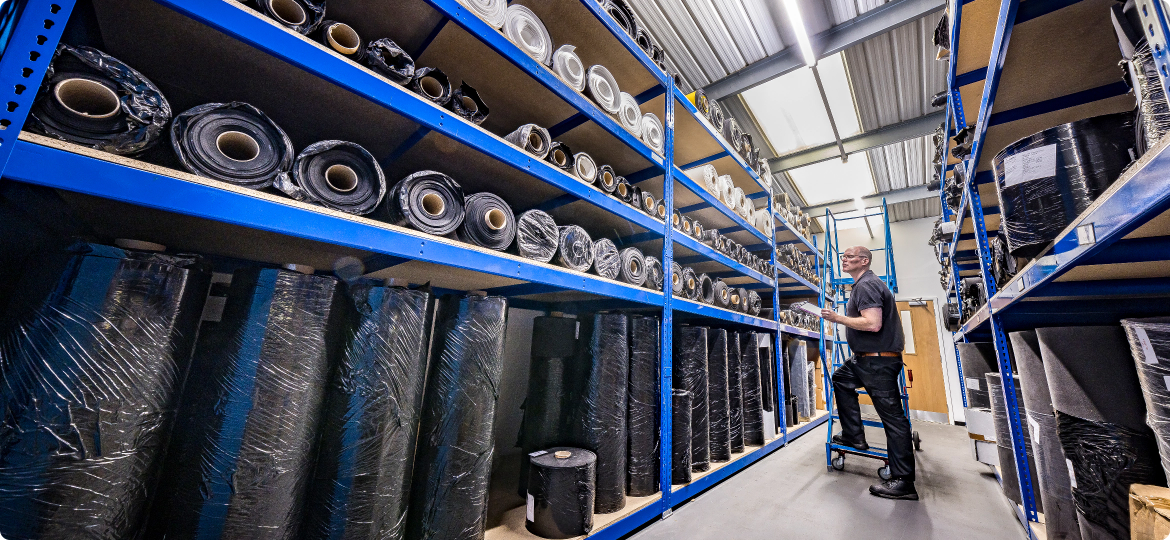
The use of solid rubber materials are used in shock absorbers, truck bumpers, and anti-vibration pads for vehicles, machinery, and equipment. These industrial rubber products reduce the risk of downtime by protecting mechanical parts.

Advantages of Solid Rubber?
Solid Robber has many advantages including its density, rigidity and force distribution.
Disadvantages of Solid Rubber?
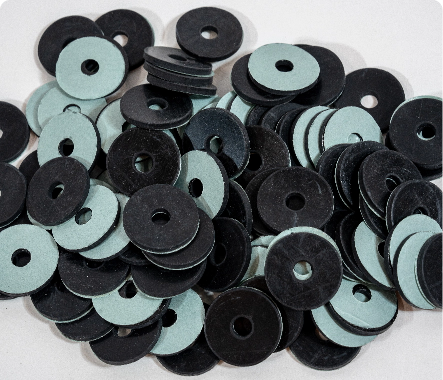
Rubber has disadvantages including its sturdiness and performance efficiency when compared to other potential materials.
MF775 solid Silicone rubber is a highly non-flammable and fire safe material, approved to BS6853, EN45545-2 and UL94 approved to V-0 and HF-1.
In addition to these properties, MF775 also maintains good resistance to UV and ozone, combined with resistance to extremely low and high temperatures, making it ideally suited for outdoor use.
Most commonly, MF775 Silicone rubber sheeting is used for applications in the mass transit industry. It is approved by and widely used within the London Underground system
Download CBF MF775 (FR8775) Datasheet
MF775 Silicone Rubber Thicknesses
1mm, 1.5mm, 2mm, 3mm, 4mm, 5mm, 6mm, And 8mm As Standard
| Fire Classification | |
|---|---|
| EN 45545 Part 2 | R1 HL2 / R7 HL2 / R22 HL3 / R23 HL3 |
| BS6853 | Cat 1a Table 7 |
| NFF 16 101 | I2 F0 |
| UL 94 | V-0 |
| Specification | Typical Values |
|---|---|
| Polymer: | Silicone |
| Colour: | Dark Grey |
| Hardness: | 73 shore A |
| Temp: | -55/+200 °C |
Mechanical properties
| Property | Typical value |
|---|---|
| Specific gravity (at 25°C, approx.) | 1.28 |
| Shore A Hardness (approx.) | 73 |
| Tensile strength (MPa approx. | 10.2 |
| Elongation at break (%, approx.) | 320 |
| Tear strength (kN/m, approx.) | 19 |
| Volume resistivity (IEC 60093 Ohm.cm, approx.) | 8.1 x 10^15 |
| Dielectric constant (IEC 60250, at 1 MHz, approx.) | 3.0 |
| Dielectric dissipation factor (IEC 60250, at 1 MHz, approx.) | 3 x 10^-3 |
Fire resistance
| CLASSIFICATION | TYPICAL VALUE |
|---|---|
| IEC 60695-11-10 | V0 |
| EN 45545 Part 2 | R1 HL2 R7 HL2 |
| BS 6853 | Category 1A Table 7 |
**Data as per our current stock grade
Overview:
Manufacturing Capabilities:
Gaskets

Strip
Washers
Sheeting
Fabrication
Extrusion
Moulding
CB Frost are a UK preferred convertor of the BISCO range of Silicone-based foams and rubbers and have a relationship with Rogers Corporation extending over 30 years.
HT200 (Sound Block) Silicone rubber materials are specifically designed to reduce the transmissions of sound within interior space and preventing the spread of fire and smoke. The elastomeric materials use a filler technology to solve acoustic, fire and smoke issues within a variety of markets.
They are supplied in roll form and are available with or without adhesives and supported backings to aid in your installation on various surfaces, wall panels, doors, flooring, and ducting.
Applications
- Sub-flooring for railcars
- Interior vehicle panels
- Air ducts
Installation
- Available with a pressure-sensitive adhesive on one or two sides to allow easy application to a variety of
surfaces. - Also available with a fibreglass backing on either side of the product at no extra charge to allow users a
variety of options for installation. The fibreglass backing enhances the strength and tear resistance of the
material, which allows users to mechanically attach the Sound Block to various surfaces such as carpet or
steel without sacrificing the integrity and durability of the BISCO Sound Block material.
Design Considerations
BISCO Sound Block may be applied and used in various forms. Please contact +44 (0) 121 773 8494 for further
assistance or samples.
HT200 (Sound Block) Silicone Rubber Thicknesses
0.64mm, 1.27mm, 1.91mm, 2.54mm And 3.81mm As Standard

| Fire Classification | |
|---|---|
| EN45545-2 | |
| R9 – Bogies Rubber Elements | HL3 (0.625 – 3.81mm) |
| Property | Typical Values |
|---|---|
| Polymer: | Silicone |
| Structure: | Solid Rubber |
| Colour: | Black |
| Temp: | -55/+250 °C |
| Sound Transmission Loss Typical of HT-200 at Various Weights |
|||||
|---|---|---|---|---|---|
| TEST METHOD |
TYPICAL SOUND TRANSMISSION LOSS RATING |
AREAL DENSITY | APPROX. THICKNESS | ||
| KG/M² | PSF | MM | IN. | ||
| ASTM E 90 | 29 | 7.32 | 1.50 | 3.81 | 0.150 |
| ASTM E 90 | 27 | 4.88 | 1.00 | 2.54 | 0.100 |
| ASTM E 90 | 25 | 3.66 | 0.75 | 1.91 | 0.075 |
| ASTM E 90 | 22 | 2.44 | 0.50 | 1.27 | 0.050 |
| ASTM E 90 | 16 | 1.22 | 0.25 | 0.64 | 0.025 |
| Flame Spread, Optical Density, and Oxygen Index | ||
|---|---|---|
| TEST METHOD | IDENTIFICATION | TYPICAL PROPERTIES |
| ASTM E 162 | Is | < 5 |
| ASTM E 662 | DSs Flaming | < 25 |
| Ds Non-Flaming | < 25 | |
| ASTM D 2863 | Oxygen Index, % | 50 |
| SMP-800C | Toxic Gas Emissions | Pass |
**Data as per our current stock grade
Overview:
Manufacturing Capabilities:
Gaskets
Strip
Washers
Sheeting
Fabrication
Our General Purpose grade operates well under extreme temperatures between -60˚C and +230˚C and has excellent resistance to ozone / UV. General Purpose Silicone has a long-life span of up to 10 years (subject to storage conditions and use).
General Purpose Silicone rubber is an inert material and does not react with most chemicals. Due to the inertness of the material, Silicone rubber is ideally suited to various applications and its weathering qualities mean that it is commonly used in a number of industries.
Most grades of solid silicone are FDA compliant for use with food and drink contact. FDA approved rubber will meet both national and international legislation requirements for the non-contamination of food.
Availability
- Supplied in continuous roll lengths
- Widths of 1200mm (standard)
- Pressure sensitive adhesive backing
- Punched and Water Jet gaskets
- Full range of standard colours
- Colour match available
Typical Applications
- Automotive, Domestic & Commercial Catering, Construction, Electronics, Energy, Food & Beverage, Heating & Ventilation (HVAC), Industrial, Lighting, Marine
Silicone Rubber Thicknesses
0.5mm, 1mm, 1.5mm, 2mm, 3mm, 5mm, 6mm As Standard
| Specification | Typical Values |
|---|---|
| Polymer: | Silicone |
| Colour: | White/Black/Red/Translucent |
| Hardness: | 60 shore A |
| Temp: | -60/+230 °C |
| Physical Properties | ||||||||
|---|---|---|---|---|---|---|---|---|
| PROPERTY | UNITS | GP30 | GP40 | GP50 | GP60 | GP70 | GP80 | TEST METHOD |
| Hardness Shore A |
Shore A ±5 |
30±5 | 40±5 | 50±5 | 60±5 | 70±5 | 80±5 | ISO 48-4 |
| Tensile Strength |
MPa | 8.0 | 9.0 | 9.0 | 10.0 | 10.0 | 8.0 | ISO 37 type 2 |
| (psi) | (1160) | (1305) | (1305) | (1450) | (1450) | (1160) | ||
| Elongation to failure |
% | 550 | 525 | 450 | 400 | 320 | 300 | ISO 37 type 2 |
| Tear Strength | N/mm | 16.0 | 23.0 | 20.0 | 22.0 | 20.0 | 20.0 | ASTM D624 die B |
| (Lb./in.) | (91) | (130) | (114) | (125) | (115) | (114) | ||
| Compression Set 24hrs / 150°C |
% | 23 | 25 | 15 | 13 | 9 | 18 | DIN/ISO 815 type B |
| Compression Set 22hrs / 300°F |
% | 20 | 22 | 16 | 10 | 10 | 16 | ASTM D395 method B type 2 |
| General Characteristics | |||||||
|---|---|---|---|---|---|---|---|
| Test | Typical Value | Standard | |||||
| GP30 | GP40 | GP50 | GP60 | GP70 | GP80 | ||
| Brittle Point | -80°C (112°F) |
-80°C (112°F) |
-80°C (112°F) |
-80°C (112°F) |
-80°C (112°F) |
-80°C (112°F) |
ASTM D746 |
| Limiting Oxygen Index | 24% | 24% | 24% | 24% | 24% | 24% | BS 2782 Part 1 |
| Thermal Conductivity | 0.24 W.m- 1.K-1 |
0.24 W.m- 1.K-1 |
0.24 W.m- 1.K-1 |
0.24 W.m- 1.K-1 |
0.24 W.m- 1.K-1 |
0.24 W.m- 1.K-1 |
VDE 0304 |
| Radiation Resistance | >10⁵ Grays (10₇ Rads) typical |
>10⁵ Grays (10₇ Rads) typical |
>10⁵ Grays (10₇ Rads) typical |
>10⁵ Grays (10₇ Rads) typical |
>10⁵ Grays (10₇ Rads) typical |
>10⁵ Grays (10₇ Rads) typical |
– |
**Data as per our current stock grade
Overview:
Manufacturing Capabilities:
Gaskets
Strip
Washers
Sheeting
Cork
Fabrication
Extrusion
Moulding
Neoprene Rubber, commonly known as Chloroprene, is a solid rubber material with a good resistance to oils, chemicals, UV, ozone, and weather conditions in general.
With its excellent strength and abrasion properties, combined with a wide temperature range of between -20˚C and 70˚C (depending on the grade of rubber). Neoprene Rubber has the right characteristics to be used in a number of industrial applications, examples include – sealing gaskets to protect against the ingress of water and dust.
Neoprene Rubber can be supplied in a selection of different grades depending on your requirements, including commercial, BS2752 (British Standard) and flame-retardant specifications.
Download CF7 - 1642 Datasheet
Neoprene Rubber Thicknesses
1mm, 1.5mm, 2mm, 3mm, 5mm, 6mm, 8mm, 10mm And 12mm As Standard
| Specification | Typical Values |
|---|---|
| Polymer: | CR/SBR |
| Colour: | Black |
| Hardness: | 65º Shore (±5) |
| Temp: | -20ºC / + 70ºC |
| Physical | ||
|---|---|---|
| PROPERTY | TYPICAL VALUE | TEST METHOD |
| Polymer | CR/SBR Blend | – |
| Colour | Black | – |
| Compression Set (22 hours @ 70°C) | 35% max | ASTM D395 Method B |
| Elongation at break | 250% min | ASTM D412 |
| Highest Recommended Working Temperature |
70°C max | – |
| Intermittent Working Temperature | 90°C short burst only | – |
| Lowest Recommended Working Temperature |
-20°C min | – |
| Shore Hardness (Shore A) | 65° Shore (±5) | ASTM D2240 |
| Specific Gravity | 1.5 g/cm³ (±0.05) | ASTM D2240 |
| Standard Roll/Sheet Size | 1400mm x 10 Meters | – |
| Tensile Strength | 3 MPA min | ASTM D412 |
**Data as per our current stock grade
Overview:
Manufacturing Capabilities:
Gaskets
Strip
Washers
Sheeting
Fabrication
Mouldings
Extrusions
Nitrile Rubber is a synthetic rubber co-polymer of acrylonitrile and butadiene..
Also known as Buna-N or NBR, Nitrile rubber is resistant to aliphatic hydrocarbons, oils, and fuels; and has a temperature range of -20 ˚C to + 70˚C. Nitrile Rubber is similar to commercial and natural rubber, as it can be attacked by UV/Ozone. Nitrile is widely used in the aeronautical, petrochemical, and automotive industries as O rings, gaskets, and seals.
It exhibits an impressive resistance to water-based chemicals as well as vegetable based hydraulic oils.
Nitrile rubber can be supplied in a selection of different grades depending on your requirements, including commercial, BS2751 (British Standard) and food grade specifications.
Download CF11 - 1713 Datasheet
Nitrile Rubber Thicknesses
1mm, 1.5mm, 2mm, 3mm, 4mm, 5mm, 6mm As Standard
| Specification | Typical Values |
|---|---|
| Polymer: | NBR/SBR |
| Colour: | Black |
| Hardness: | 65º Shore (±5) |
| Temp: | -20ºC / +70ºC |
| Physical | ||
|---|---|---|
| PROPERTY | TYPICAL VALUE | TEST METHOD |
| Polymer | NBR/SBR Blend | – |
| Colour | Black | – |
| Compression Set (22 hours @ 70°C) | 35% max | ASTM D395 Method B |
| Elongation at break | 250% min | ASTM D412 |
| Highest Recommended Working Temperature |
70°C max | – |
| Intermittent Working Temperature | 90°C short bursts only | – |
| Lowest Recommended Working Temperature |
-20°C min | – |
| Shore Hardness (Shore A) | 65° Shore (±5) | ASTM D2240 |
| Specific Gravity | 1.5 g/cm³ (±0.05) | ASTM D2240 |
| Standard Roll/Sheet Size | 1400mm x 10 Meters | – |
| Tensile Strength | 3 MPA min | ASTM D412 |
**Data as per our current stock grade
Manufacturing Capabilities:
Gaskets
Strip
Washers
Sheeting
Fabrication
Extrusion
Moulding
Commercial Rubber, or SBR Rubbers, exhibit excellent physical properties, for example, good tensile strength, low compression set and high tear properties.
Whilst Commercial Rubber has a high resistance to abrasion, it tends to degrade much quicker when subjected to contact with UV and ozone, so commercial and insertion rubber gaskets are not ideal for outdoor use.
Commercial rubber offers an excellent economical alternative to other grades of rubber materials including Neoprene, EPDM and Silicone. With prices of Commercial rubber tending to be much more competitive in price, Commercial/Insertion rubber gaskets provide a cheaper option for a wide variety of applications. In addition to the benefits in terms of cost, Commercial rubber gaskets can also be supplied in a selection of grades including BS1154, shore hardness (40 to 80 shore A, depending on grade), and in a good range of thicknesses.
Download CF8 - 8313 Eco Datasheet
Commercial Rubber Thicknesses
1mm, 1.5mm, 2mm, 3mm, 5mm, 6mm, 8mm, 10mm And 12mm As Standard
| Specification | Typical Values |
|---|---|
| Polymer: | NR/SBR |
| Colour: | Black |
| Hardness: | 70 shore A |
| Temp: | -30ºC / +70ºC |
| Physical | ||
|---|---|---|
| PROPERTY | TYPICAL VALUE | TEST METHOD |
| Polymer | NR/SBR Blend | – |
| Colour | Black | – |
| Compression Set (22 hours @ 70°C) | 30% max | ASTM D395 Method B |
| Elongation at break | 250% min | ASTM D412 |
| Highest Recommended Working Temperature |
70°C max | – |
| Intermittent Working Temperature | 90°C short bursts only | – |
| Lowest Recommended Working Temperature |
-30°C min | – |
| Shore Hardness (Shore A) | 70° Shore (±5) | ASTM D2240 |
| Specific Gravity | 1.5 g/cm³ (±0.03) | ASTM D2240 |
| Standard Roll/Sheet Size | 1400mm x 10 Meters | – |
| Tensile Strength | 3 MPA min | ASTM D412 |
**Data as per our current stock grade
Manufacturing Capabilities:
Gaskets
Strip
Washers
Sheeting
Fabrication
Extrusion
Moulding
Commercial Insertion rubber is mixed with other polymers as a method of keeping costs to a minimum.
An economy grade 70 shore A rubber with a single ply polyester insertion makes it ideal for use as vehicle mud flaps, door skirts/draught excluders, work top counters and general gaskets.
CB Frost hold stock in a range of thicknesses on the shelf, from 1mm up to 6mm. Rolls are 1.4mtrs wide by 5 or 10mtrs long depending on thickness.
This grade (1 ply) cannot be extruded or moulded into shapes/gaskets.
There are no European or International standards that SBR insertion rubber sheeting is required to meet, and it is not Food safe.
Download CF14 - 8172 Datasheet
Commercial Insertion Rubber Thicknesses
3mm, 5mm, 6mm As Standard
| Specification | Typical Values |
|---|---|
| Polymer: | NR/SBR |
| Colour: | Black |
| Hardness: | 65 shore A |
| Temp: | -30ºC / +70ºC |
| Physical | ||
|---|---|---|
| PROPERTY | TYPICAL VALUE | TEST METHOD |
| Polymer | NR/SBR Blend | – |
| Colour | Black | – |
| Compression Set (22 hours @ 70°C) | 30% max | ASTM D395 Method B |
| Elongation at break | 250% min | ASTM D412 |
| Highest Recommended Working Temperature |
70°C max | – |
| Insertion Type | Cotton as standard | – |
| Intermittent Working Temperature | 90°C short bursts only | – |
| Lowest Temperature Folding | -30°C min | BS EN IEC61111 |
| Shore Hardness (Shore A) | 65° Shore (-4+5) | ASTM D2240 |
| Specific Gravity | 1.5 g/cm³ (±0.05) | ASTM D2240 |
| Standard Roll/Sheet Size | 1400mm x 10 Meters | – |
| Tensile Strength | 3 MPA min | ASTM D412 |
**Data as per our current stock grade
Overview:
Manufacturing Capabilities:
Gaskets
Strip
Washers
Sheeting
Fabrication
Ethylene Propylene Diene Monomer, commonly known as EPDM is a synthetic solid rubber material.
It is well suited to and commonly made use of for outdoor and automotive applications due to its outstanding weathering properties and high resistance to ozone and UV, as well as a considerable temperature resistance range (between -30˚C + 80˚C, depending on the grade).
It is available in a range of shore hardness’s subject to the specified grade (40 to 80 shore A).
EPDM shows a good resistance to water-based chemicals and vegetable-based hydraulic oils, making it ideal for automotive use.
EPDM rubber gaskets can be supplied in a selection of different grades depending on your requirements, including commercial, WRAS and flame-retardant specifications.
Download CF10 - E80 Eco Datasheet
EPDM Rubber Thicknesses
1mm, 1.5mm, 2mm, 3mm, 4mm, 5mm, 6mm As Standard
| Specification | Typical Values |
|---|---|
| Polymer: | EPDM/SBR |
| Colour: | Black |
| Hardness: | 70 shore A |
| Temp: | -30/+80 °C |
**Data as per our current stock grade
Overview:
Manufacturing Capabilities:
Gaskets
Strip
Washers
Sheeting
Fabrication
Extrusion
Moulding
LSLT EPDM (ethylene propylene diene monomer) has been independently tested and certified by leading fire test laboratories throughout Europe.
Conforming to EN45545-2, a full material data sheet and test reports are available upon request.
LSLT EPDM is available in 50, 60 & 70 shore A hardness and has excellent environmental resistance, withstanding Ozone, UV, rain, and frost meaning outdoor applications such as lighting systems and enclosures are kept water and dust tight. LSLT EPDM is resistant to corrosion, moisture, salt, and light fuels.
LSLT EPDM has great flexibility, strength, and durability. This means it is ideal for all safety critical applications in Rail; Marine Vessels; Oil & Gas; Public Transport and Heavy Goods Vehicles.
Download CBF - LSLT EPDM 50A Datasheet
Download CBF - LSLT EPDM 60A Datasheet
Download CBF - LSLT EPDM 70A Datasheet
LSLT EPDM Rubber (EN45545-2) Thicknesses
2mm, 3mm, 4mm, 5mm, 6mm, 8mm And 10mm As Standard
| Fire Classification | |
|---|---|
| EN45545-2 (R22 / R23) | HL3 |
| Specification | Typical Values |
|---|---|
| Polymer: | EPDM |
| Colour: | Black |
| Hardness: | 50, 60 & 70 shore A |
| Temp: | -30/+100 °C |
CBF LSLT EPDM 50A
General Information
- Compound: CBF LSLT EPDM 50A
- Specification: EN 455 45-2 R22/R23 HL3
EPDM solid, 50 Shore A, high performance, flame retardant, extrusion compound, non-halogen (<0.02%).
| Properties | Method | Unit | Result | Requirement |
|---|---|---|---|---|
| Polymer | DIN ISO 1629 | – | EPDM | EPDM |
| Curing system | – | – | Sulphur | – |
| Color | – | – | Black | Black |
| Specific gravity | EN ISO 1183 | g/cm³ | approx. 1.47 | – |
| Hardness | DIN ISO 7619-1 | SHA | 50 | 50+-5 |
| Tensile strength | DIN 53 504 | N/mm² | 6.7 | – |
| Elongation at break | DIN 53 504 | % | 550 | – |
| Tear strength | DIN ISO 34-1 A | N/mm | 3 | – |
| Compr. set 24h/70°C | ISO 815 | % | 13 | – |
| Compr. set 24h/100°C | ISO 815 | % | 29 | – |
| Compr. set 24h/-25°C | ISO 815 | % | 90 | – |
| Ozon resistance | DIN ISO 1431-1 | – | Resistant | – |
| Nitrosamine generating | – | – | No carcinogenic nitrosamine generating raw materials are used | |
| Non-halogen | – | – | Non-halogen <0.02% | – |
| REACH/SVHC compliance | 23-Jan 2024 | – | Compliant | – |
| Cold brittleness temperature | ASTM D 2137 A | °C | – | – |
| Electr. Volume resistivity | IEC 60093 100V | Ohmcm | 7.3E+14 | – |
| Electr. Surface resistivity | IEC 60093 100V | Ohmcm | 9.5E+11 | – |
| Service temperature range | – | °C | -40/+100 | – |
| Abrasion resistance | DIN ISO 4649 | mm³ | 520 | – |
| EN 455 45 classification (11/2021) | – | Class | R22/23 HL3 | – |
| Smoke density gas analysis | EN ISO 5659-2 | Ds max | 47 | max. 150 (HL3) |
| Limiting Oxygen Index LOI | ISO 4589-2 | % | 38.8 | min. 32 (HL3) |
| Toxicity | NF X 70-100-1 / NF X 70-100-2 | CIT NLP | 0.07 | max. 0.75 (HL3) |
Note: Test results were determined on vulcanized (10 min/180°C) test sheets. [cite: 33]
Compound Properties, Uncured
| Parameter | Method | Unit | Req. | Result |
|---|---|---|---|---|
| Mooney viscosity ML 1+4 100°C | ISO 289-1 | MU | – | 61 |
| Mooney Scorch 130°C | ISO 289-1 | – | – | – |
| Viscosity | – | MU | – | 47 |
| T5 | – | min | – | 9 |
| Rheology MDR 2000 0.5 1.67 Hz 3′ 180°C | ISO 6502 | – | – | – |
| ML | – | dNm | – | 1.6 |
| MH | – | dNm | – | 11 |
| T5 | – | min | – | 0.85 |
| T10 | – | min | – | 1 |
| TS2 | – | min | – | 1.3 |
| T90 | – | min | – | 2.5 |
CBF LSLT EPDM 60A
General Information
- Compound: CBF LSLT EPDM 60A
- Specification: EN45545-2 compliant 60A EPDM Rubber
| Specification / Property | Method | Unit | Spec Limits | Result |
|---|---|---|---|---|
| Polymer | BS ISO 1629 | – | – | EPDM |
| Curing system | – | – | – | Sulphur |
| Color | – | – | Black | Black |
| Specific gravity | BS ISO 1183 | g/cm³ | – | approx. 1.50 |
| Hardness | BS ISO 48 | SHA | 60 ± 5 | 64 |
| Tensile Strength | BS ISO 37 | N/mm² | – | ca. 5 |
| Elongation at Break | BS ISO 37 | % | – | > 350 |
| Tear Strength | BS ISO 34-1 | N/mm | – | ca. 5 |
| Compr. set 24h/70°C | BS ISO 815 | % | – | 20 |
| Compr. set 24h/100°C | BS ISO 815 | % | – | 40 |
| Ozone resistance 168h/40°C | BS ISO 1431-1 | – | No cracks | No cracks |
| Nitrosamine Generating | – | – | No carcinogenic nitrosamine… | are used |
| Halogen free | – | – | – | non-halogen (<0.02%) |
| REACH/SVHC compliant | – | – | – | compliant (as of 17/01/2023) |
| EN 45545-2 classification | – | – | – | class R22/23, HL3 |
| Smoke Density | EN ISO 5659-2 | – | max. 150 (HL3) | 57 |
| Limiting Oxygen Index LOI | ISO 4589-2 | % | 32% min. (HL3) | 32.8 |
| Toxicity | NF X 70-100-1 / NF X 70-100-2 | CIT NLP | max. 0.75 (HL3) | 0.16 |
| HCI | – | mg/g | – | 1.07 |
| HBr | – | mg/g | – | 0 |
| HFI | – | mg/g | – | 0 |
| Electrical Volume Resistivity | IEC 60093 | Ohmcm | – | 1.5E+14 |
| Service Temperature Range | – | °C | – | -30°C to +100°C |
| Low Temp Brittleness Point | – | °C | – | -35 |
Note: Test results were determined on vulcanized (10 min/180°C) test sheets. [cite: 43]
All data relating to suitable uses and descriptions information concerning the products are compiled from research, are believed to be reliable, but are provided for guidance purposes only. [cite: 44]
CBF LSLT EPDM 70A
General Information
- Compound: CBF LSLT EPDM 70A
- Specification: EN45545-2 compliant 70A EPDM Rubber
| Specification / Property | Method | Unit | Spec Limits | Result |
|---|---|---|---|---|
| Polymer | BS ISO 1629 | – | – | EPDM |
| Curing system | – | – | – | Sulphur |
| Color | – | – | Black | Black |
| Specific gravity | BS ISO 1183 | g/cm³ | – | approx. 1.54 |
| Hardness | BS ISO 48 | SHA | 70 ± 5 | 73 |
| Tensile Strength | BS ISO 37 | N/mm² | – | ca. 4.5 |
| Elongation at Break | BS ISO 37 | % | – | > 350 |
| Tear Strength | BS ISO 34-1 | N/mm | – | ca. 6 |
| Compr. set 24h/70°C | BS ISO 815 | % | – | 20 |
| Compr. set 24h/100°C | BS ISO 815 | % | – | 40 |
| Ozone resistance 168h/40°C | BS ISO 1431-1 | – | No cracks | No cracks |
| Nitrosamine Generating | – | – | No carcinogenic nitrosamine… | are used |
| Halogen free | – | – | – | non-halogen (<0.02%) |
| REACH/SVHC compliant | – | – | – | compliant UK/EU (23.01.2024) |
| EN 45545-2 classification | – | – | – | class R22/23, HL3 |
| Smoke Density | EN ISO 5659-2 | – | max. 150 (HL3) | 69 |
| Limiting Oxygen Index LOI | ISO 4589-2 | % | 32% min. (HL3) | 34.9 |
| Toxicity | NF X 70-100-1 / NF X 70-100-2 | CIT NLP | max. 0.75 (HL3) | 0.17 |
| Electrical Volume Resistivity | IEC 60093 | Ohmcm | – | 3.40E+14 |
| Service Temperature Range | – | °C | – | -30°C to +100°C |
| Low Temp Brittleness Point | – | °C | – | -35 |
Note: Test results were determined on vulcanized (10 min/180°C) test sheets. [cite: 51]
All data relating to suitable uses and descriptions information concerning the products are compiled from research, are believed to be reliable, but are provided for guidance purposes only. [cite: 52]
**Data as per our current stock grade
Overview:
Manufacturing Capabilities:
Gaskets
Strip
Washers
Sheeting
Fabrication
Extrusion
Moulding
Fine Fluted Ribbed Matting is a 65 shore A rubber that has narrow ribs running down the length of the roll and a cloth mark surface on the reverse side.
The narrow strips give the material a non-slip surface, making it suitable as floor covering for temporary or semi-permanent use in industrial and commercial areas, horse boxes, steps, ramps, pickup and van load beds and tool top boxes.
CB Frost stock Fine Fluted Ribbed Matting at 3mm and 6mm thick. Rolls are either 915mm, 1mtr or 1.22mtrs wide x 10mtrs long.
Download CF17 - 0370 Datasheet
Fine Fluted Ribbed Matting Thicknesses
3mm And 6mm As Standard
| Specification | Typical Values |
|---|---|
| Polymer: | NR/SBR |
| Colour: | Black |
| Hardness | 65 shore A |
Physical
| Physical | ||
|---|---|---|
| PROPERTY | TYPICAL VALUE | TEST METHOD |
| Polymer | SBR | – |
| Colour | Black | – |
| Compression Set (22 hours @ 70°C) | 30% max | ASTM D395 Method B |
| Elongation at break | 250% min | ASTM D412 |
| Highest Recommended Working Temperature |
70°C max | – |
| Intermittent Working Temperature | 90°C short bursts only | – |
| Lowest Recommended Working Temperature |
-20°C min | – |
| Specific Gravity | 1.5 g/cm³ (±0.05) | ASTM D2240 |
| Standard Roll/Sheet Size | 914mm x 10 Meters 1000mm x 10 Meters 1220mm x 10 Meters |
– |
| Tensile Strength | 2.8 MPA min | ASTM D412 |
**Data as per our current stock grade
Overview:
Manufacturing Capabilities:
Gaskets
Sheeting