






Why Choosing the Right EN45545 Gasket is Critical for Rail Industry Safety
News
June 4, 2026
In the modern rail industry passenger safety dictates every phase of vehicle design, engineering, and manufacturing. Major structural components, advanced braking mechanisms, and crash-management systems often take the spotlight, but even seemingly minor components within train interiors are absolutely vital for passenger safety during an emergency. One of the most...

In the modern rail industry passenger safety dictates every phase of vehicle design, engineering, and manufacturing. Major structural components, advanced braking mechanisms, and crash-management systems often take the spotlight, but even seemingly minor components within train interiors are absolutely vital for passenger safety during an emergency. One of the most critical, but less talked about elements, in rail interior environments is the EN45545 gasket.
Gaskets are used extensively throughout rail vehicles, from sealing doors and securing windows to isolating HVAC systems, and protecting electrical and lighting enclosures. Whatever the application, it is essential that the right gasket materials are chosen.
- Critical safety role: While often overlooked, EN45545 gaskets are vital for passenger safety, securing everything from doors and windows to HVAC and electrical systems.
- Rail fire hazards: In enclosed rail environments like tunnels, smoke inhalation and toxic fumes are the primary causes of injury. Non-compliant rubber can act as fuel, accelerating fire and creating blinding smoke that blocks evacuation routes.
- EN45545-2 standard: Established in 2013, this regulation unifies fire safety by testing materials for fire, smoke, and toxicity. Materials are categorised by Hazard Levels (HL1 to HL3) based on the operating environment.
- Consequences of non-compliance: Using non-compliant materials leads to severe legal penalties, vehicle recalls, and lasting brand damage.
- Applications: EN45545 gaskets prevent fire from breaching compartments via doors/windows and stop the spread of toxic smoke through HVAC networks.
- Expert manufacturing: CB Frost converts high-performance materials (such as Bisco® silicone foams and LSLT EPDM) into precision components that meet stringent HL3 safety benchmarks.
The Unique Danger of Fire in the Rail Environment
Trains are high capacity, enclosed spaces that frequently travel at high speeds through remote areas, lengthy tunnels, or underground networks. In the event of a fire, immediate evacuation is often physically impossible, and this is why material selection is so critical.
During a rail fire, the flames themselves are not the only danger. Statistics consistently show that smoke inhalation and exposure to toxic fumes are the leading causes of injury and fatality in train fire incidents.
Choosing the wrong rubber gaskets or sealing materials for rail interiors can have catastrophic real-world consequences. Standard, non-rated industrial rubber compounds can act as highly combustible fuel. When exposed to heat or open flame, they can accelerate the spread of the fire and emit thick, lethal, and blinding smoke. This dark smoke quickly obscures emergency lighting and signage, plunging passengers into darkness and severely impeding evacuation routes.
Beyond the threat of fire and smoke spreading, using substandard gasket materials also presents huge compliance and operational problems. Rail manufacturers and suppliers caught using non-compliant parts face heavy legal penalties, costly vehicle recalls, and irreparable damage to their brand reputation.
The EN45545-2 Standard
To combat the specific risks of the rail sector and unify fire safety regulations across European and international railways, the EN45545-2 standard was established in 2013. This safety regulation stringently dictates the fire, smoke and toxicity properties of all materials and components used in railway vehicles.
Under the EN45545-2 directive, materials are rigorously tested and categorised based on their use and the specific Hazard Level (HL1, HL2, or HL3) required for the operating environment of the train. For example, a high-speed sleeper train or a subterranean metro system will require the highest hazard level classification (HL3) due to the extreme difficulty of evacuation.
By selecting fully certified EN45545 gaskets, engineers ensure that the materials will resist ignition, prevent the spread of fire, and drastically limit the release of harmful gases. This critical delay in fire propagation grants passengers and crew the precious minutes needed to evacuate safely.
Key Applications for EN45545 Gaskets
EN45545-2 compliant gaskets are not just used in one specific area; they are integral to the entire anatomy of a train car. Key interior applications include:
- HVAC systems: Sealing ducting and conditioning units to prevent the rapid spread of toxic smoke through the train’s ventilation network.
- Door and window seals: Providing weather-tight insulation while ensuring fire doesn’t easily breach passenger compartments.
- Lighting and electrical enclosures: Preventing localised electrical faults from igniting surrounding panels and materials.
- Flooring and panelling: Providing vibration dampening and acoustic insulation between interior panels without adding combustible mass.
How CB Frost Delivers Uncompromising Rail Safety
At CB Frost & Co, we know that there is zero room for error or compromise when engineering components for mass transit. As a preferred converter for Rogers Corporation, we are experts in manufacturing fully compliant gaskets from the highest performance, EN45545 compliant materials available on the market, including specialised silicone and EPDM sponges, foams and solid rubbers.
Compliant Rail Materials (EN45545-2)
- Bisco® HT800 medium silicone foam
- Bisco® BF1000 soft silicone foam
- Bisco® BF2000 ultra soft silicone foam
- CBF Sil-V0 silicone sponge
- MF1 (55) seating foam
- MF775 (FR8775) silicone rubber
- LSLT EPDM rubber
- LSLT neoprene sponge
- Rail SD and SDC Insulation foam
- Sustamid (plastic)
Our experienced team works closely with rail operators, OEMs, and rail interior designers to ensure that every seal, gasket, and extrusion meets the exact specifications and hazard levels of the project. We convert these high performance materials, specifically formulated and independently tested to pass stringent regulatory standards, into precision-cut moulded, extruded, or fabricated components.
From high volumes of die-cut gaskets to custom extrusions and waterjet-cut profiles, our advanced manufacturing capabilities guarantee that your rail interiors are equipped with materials that meet the highest possible safety, durability, and performance benchmarks.
Don’t leave passenger safety or EN45545-2 regulatory compliance to chance. Partner with a manufacturer that truly understands the rigorous demands and life saving importance of the modern rail sector.
Learn more about our dedicated manufacturing capabilities for the rail sector and explore our complete range of compliant materials by visiting our rail industry page.
If you are ready to start on your next rail project, talk to our experienced sales team.
Keep up to date with the
latest CB Frost & Co news

With the continuing COVID-19 pandemic, 2021 has certainly brought many challenges for CB Frost, our suppliers and our customers. However, despite this, it has been another important year for us. Let’s take a look back at the last 12 months. Celebrating our 100th Anniversary In March of this year, we celebrated 100 years of CB […]

As the festive lights brighten the streets of Birmingham, and we prepare to shut down for Christmas, we find ourselves reflecting on more than just our production targets and latest projects. At CB Frost & Co, this time of year is always a time to pause and consider our role within the community that has […]

Last month, we were at Derby Arena for this year’s Rolling Stock Networking show, the UK’s biggest annual international rail show. RSN 2024 featured 154 exhibitors, including CB Frost, and welcomed over 2,000 attendees from rail trade associations, passenger and freight train operating companies, manufacturers, technical equipment suppliers and services companies, amongst many other organisations […]
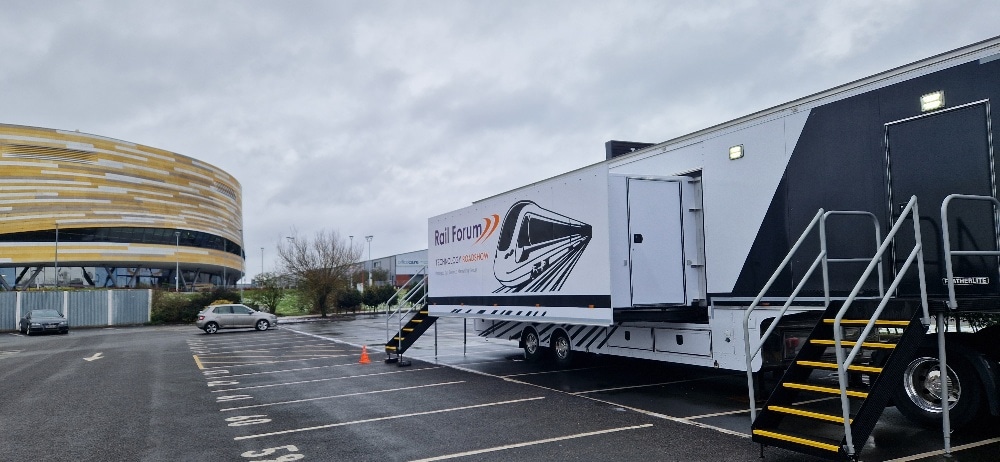
March has been a busy month for CB Frost, with members of our sales team representing us at the Rail Industry Technology Roadshow. The two week long exhibition, supported by Rail Forum and facilitated by Brewco Marketing Group, visited a number of prominent rail industry sites throughout England. As a roadshow, even the exhibition space, […]

Whilst a gasket may be a relatively simple component in many cases, the importance of choosing the right gasket materials cannot be underestimated. Selecting a material that lacks the required properties leads to gasket failure, the repercussions of which can be extremely costly, both in terms of production delays and equipment damage, or even injury. […]

As a specialist in the supply and conversion of rubber, sponge and foam materials for an extensive range of industrial applications, we work hard to meet our customer requirements, and do what we can to adapt our products to improve their processes. For example, our adhesive laminating processes can be used to apply adhesive backing […]

Following months of work, CB Frost has been awarded a £60k defence industry contract from MoD to support the British Army. In 2019, a specific group of OEMs were selected to undertake key parts of the manufacturing process for the MoD’s new Boxer armoured vehicle. In addition to fabricating armoured vehicle structures, they were also […]

Having teamed up with Rogers’ Corporation and their range of PORON® polyurethanes and BISCO® silicone materials, CB Frost have entered the fast growing electric vehicles market, manufacturing and supplying a range of EV battery components, including battery compression pads and cushions, anti-vibration pads, enclosure seals, thermal runaway protection and impact protection pads. In order to […]

Kicking off a busy summer of industry shows and exhibitions, CB Frost presented at the latest Make UK Defence Networking event. For over 30 years, CB Frost has been an approved supplier to the MoD, manufacturing and distributing a wide range of high performance sponge and rubber components, including gaskets, rubber gaiters, o-rings, bespoke turret […]