




Die-Cut vs. Waterjet Cut Silicone Gaskets
News
August 4, 2026
What’s the best choice for your production run? Selecting the right material is critical for manufacturing high-performance seals, but how that material is converted also plays an important role in the quality, cost, and lead times of your project. Whether you are producing solid silicone rubber gaskets for an automotive...
What’s the best choice for your production run?
Selecting the right material is critical for manufacturing high-performance seals, but how that material is converted also plays an important role in the quality, cost, and lead times of your project. Whether you are producing solid silicone rubber gaskets for an automotive enclosure or lighting seals, or compressible sponge gaskets for HVAC insulation, choosing the correct cutting method contributed to the best performance and budget efficiency.
At CB Frost & Co, we have invested heavily in our advanced manufacturing capabilities and cutting facilities. Here is a breakdown of when to choose die-cutting, high-speed kiss cutting, or waterjet cutting for your next silicone gaskets production run
When Should You Choose Die-Cutting for Silicone Gaskets?
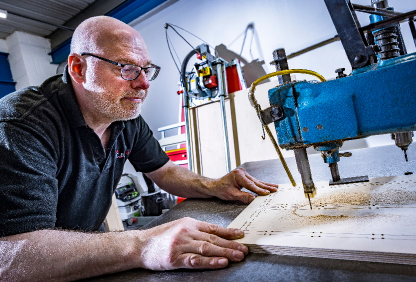
Die-cutting uses a custom made cutting die to stamp out shapes from sheets or rolls of silicone to create gaskets. Choose die-cutting when manufacturing medium-to-high volume runs of standard solid silicone or silicone sponge gaskets. A custom steel die stamped by a high-powered press provides a fast, repeatable, and cost-effective solution that quickly absorbs initial tooling expenses across large production batches.
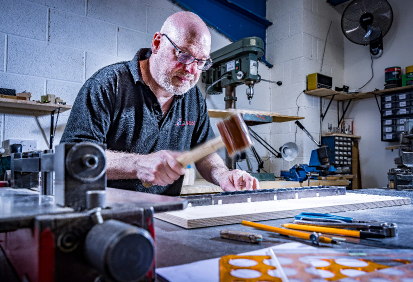
Selecting die-cutting allows manufacturers to produce thousands of identical seals with tight tolerances and minimal unit costs. With our tooling room, we can manufacture die-cutting formes in-house, meaning upfront tooling lead times and expenses are kept to a minimum.
| Die-Cutting | |
| How It Works | A high-powered press forces a custom steel tool through the material, cleanly shearing out the gasket shape in a single motion. |
| Best For | Medium to high-volume production runs. |
| Material Compatibility | Highly effective for both solid silicone and silicone sponge materials (provided that the material is not too thick). |
| Tooling & Cost | Die cutting incurs a small upfront tooling cost to create the custom die, but high-speed output rapidly absorbs this cost over larger batches. At CB Frost, we manufacture die cutting formes on site in our Toolroom to reduce lead times and costs. |
| The Verdict | If you are manufacturing thousands of silicone gaskets, die-cutting is exceptionally fast, highly repeatable, and the most cost-effective option for large runs. |
When is High-Speed Kiss Cutting the Right Choice?
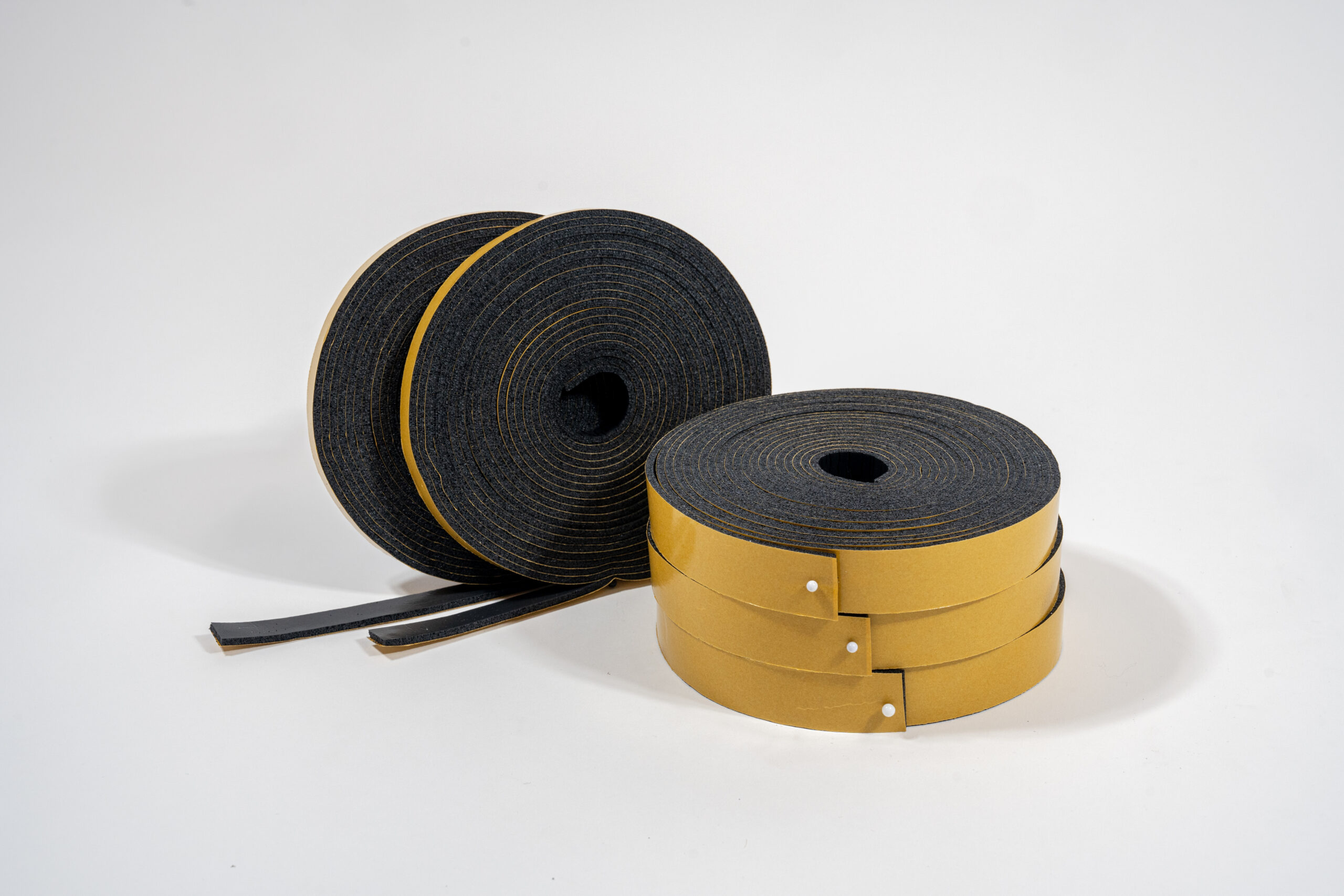
Kiss cutting is ideal for high-volume peel-and-stick applications where assembly speed is one of the most important considerations. The process cuts through the silicone seal while leaving the continuous adhesive backing roll intact, eliminating manual sorting and allowing operators to rapidly peel and apply gaskets.
Delivering finished gaskets on continuous rolls rather than loose pieces helps streamline operations on fast-paced manufacturing floors. It is particularly effective for thinner materials applied directly to electrical enclosures, lighting units, and HVAC systems.
| Kiss-Cut Rolls | |
| How It Works | Gaskets are cut through the silicone down to (but not through) the adhesive backing liner, delivering gaskets on a continuous roll rather than loose, individual pieces. |
| Best For | High volume gasket production, fast-paced assembly lines and high-speed peel-and-stick applications. |
| Material Compatibility | Best suited for thinner solid and sponge materials with self-adhesive backings. |
| Efficiency Impact | Eliminates manual sorting and backing removal difficulties, saving significant labour time on production lines. |
| The Verdict | High-speed kiss cutting is the idea choice for high-volume efficiency. If your team rapidly peels and places silicone sponge gaskets onto electrical enclosures, HVAC units, or lighting fixtures, kiss-cut rolls maximise speed and throughput for high-volume runs. |
Why Select Waterjet Cutting for Complex or Thick Silicone Gaskets?
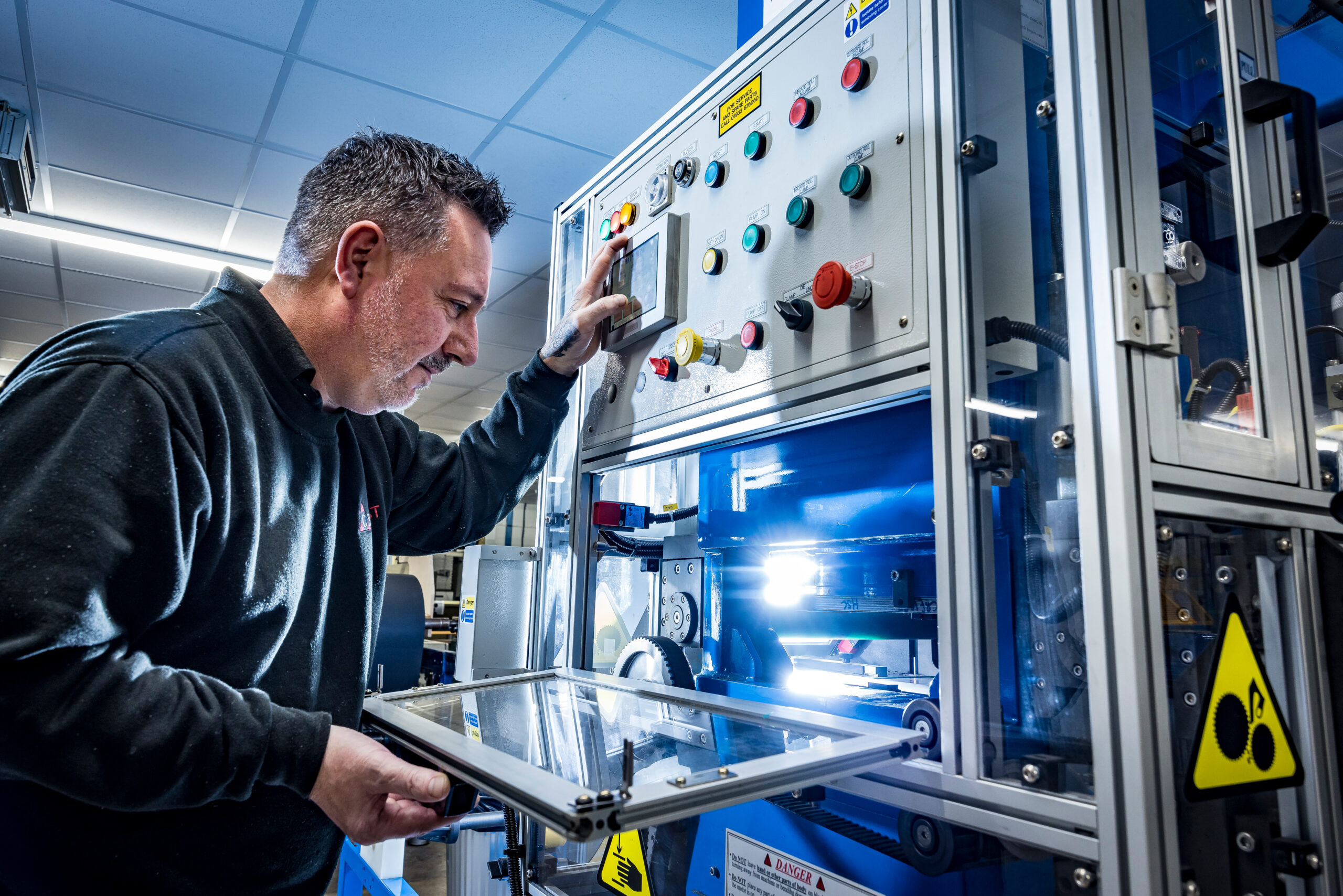
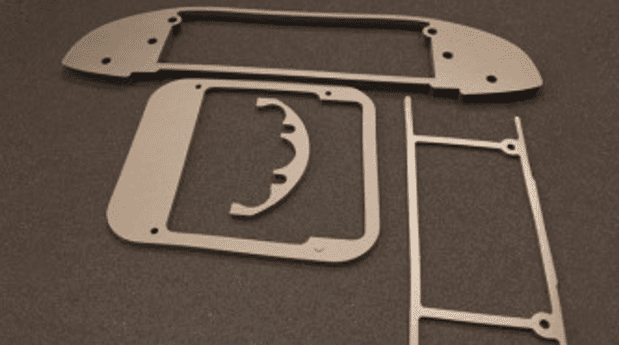
Waterjet cutting is often the preferred choice for prototypes, short production runs, complex gasket designs, and thick silicone materials. Because a CNC-guided water stream cuts without physical downward pressure, it prevents soft sponge from crushing and creates clean, perfectly vertical edges without the need for expensive dies.
Using direct-from-CAD processing, waterjet technology completely removes the need for physical tooling. This enables immediate production turnarounds and easy design modifications for low-to-medium volume runs.
| Waterjet Cutting | |
| How It Works | A high-pressure water stream cuts the material directly from a digital CAD file with pinpoint accuracy. |
| Best For | Prototypes, low-to-medium volume runs, complex/intricate shapes, and exceptionally thick materials. |
| Material Compatibility | Ideal for both thick solid silicone rubber and soft silicone sponge, delivering clean, smooth vertical edges. |
| Tooling & Cost Structure | Zero upfront tooling costs and no physical die setup delays, making short runs instantly accessible. |
| The Verdict | Perfect for rapid prototyping and bespoke production. Because the waterjet exerts no physical downward pressure, it prevents soft silicone sponges from crushing or bowing during the cut, delivering superior dimensional accuracy on complex or thick gaskets. |
Choosing the Right Method for Your Silicone Gaskets
To choose the best cutting process, consider these four core criteria: your total production volume, material thickness, gasket design complexity, and required assembly speed. High-volume runs favour die or kiss-cutting, whereas thick materials, intricate shapes, and rapid prototypes are better suited to waterjet cutting.
When evaluating gasket production techniques, review this checklist:
- Volume: Waterjet cutting is often a good choice for short runs and prototypes, as it avoids tooling costs. For large-scale, high volume gasket production, opt for die cutting or kiss cutting.
- Material Thickness: Waterjet cutting handles thicker materials, whereas die-cutting is better suited to thin to medium gauge sheet or roll material.
- Assembly Needs: If your team requires rapid, peel-and-stick assembly, high-speed kiss cutting on a roll is an ideal choice.
- Design Complexity: Waterjet cutting offers a high level of precision for intricate, complex gasket profiles that cannot be easily achieved with a steel blade.
Optimise Your Gasket Production with the Right Cutting Technology
Selecting the right conversion process is just as important to your project’s success as choosing the right grade of silicone. Working with CB Frost, you benefit from our extensive material stock, with our in-house toolroom, cutting presses (including our high speed cutting press), and advanced waterjet systems, we help you reduce unit costs, cut out bottlenecks that affect lead times, and ensure flawless seal performance.
Talk to our expert sales team today to discuss your technical drawings and explore the best cutting strategy for your silicone gaskets.
Keep up to date with the
latest CB Frost & Co news

As we enter the new year, it provides an ideal opportunity to reflect on the events of the year that just passed. Whilst 2020 and 2021 saw us face certain restrictions as a result of COVID-19 as businesses in all industries continued to face the long term effects of the pandemic, 2022 was a year […]

The CB Frost Guide to Hazard Levels, Fire Safety, and Material Selection for the Rail Industry. Passenger safety is at the centre of every design decision for the modern rail industry. Since the mandatory adoption of EN45545-2 (the European standard for fire protection on rail vehicles) across Europe in 2016, gasket materials designed for the […]
When a fire breaks out inside a rail carriage, passenger safety relies on how long internal seals can delay the spread of flames, smoke and toxic gases. Specifying BF2000 strips and custom gaskets provides an essential barrier to prevent rapid fire propagation, preserving carriage air quality, and maintaining clear emergency visibility. These ultra-soft, highly compressible […]

At CB Frost & Co, we are always working to increase our efficiency and look to the future to be able to provide the highest quality of products and services to our customers. As the company grows, to ensure we continue to offer the high level of customer care expected from us, we also endeavour […]

With the rapid acceleration of the Electric Vehicle (EV) market, we have seen an unprecedented focus on battery technology. At the heart of every EV lies its battery pack, a complex and highly sensitive component that demands robust protection. Ensuring the safety, performance, and longevity of EV batteries relies heavily on effective sealing and cushioning […]

Over the decades, we have gained significant expertise in rubber moulding processes. With our extensive catalogue of materials, we supply moulded rubber parts in a range of commercial materials, along with industry specific grades, ensuring that our customers can choose the best material to suit their application. Our team is always on hand to help […]

At CB Frost & Co, “Quality without compromise” is more than just a catchy tagline—it’s the ethos that has driven our business for over 100 years. A lot has changed since our beginnings in 1921, but our drive to provide the best for our customers has not. Whether we are manufacturing intricate gaskets for the […]

The rumble of rail industry innovation echoed around the UK this March, as the Rail Forum Rail Industry Technology Roadshow took to the roads. Spanning eight busy days, from the 10th to the 21st March, this one-of-a-kind event brought cutting-edge rail solutions directly to the heart of the industry, thanks to a state-of-the-art trailer, transformed […]
PORON® Urethane is a flexible and highly versatile open celled foam material that offers excellent performance in many different applications, from everyday equipment such as sportswear, protective gear, and communications equipment, to parts within the Hubble Space Telescope. With its compression set resistance, non-fogging, and low outgassing properties, it is well suited for many cushioning, […]