






Your Questions about Injection Moulding Answered | Bespoke Rubber Mouldings
Uncategorised
June 6, 2017
As specialists in the manufacture of rubber components, we have many years of experience in producing and supplying bespoke rubber mouldings for use in a vast range of different industries. With our in-house capability, we can choose from a number of different process in order to achieve the ideal results...

As specialists in the manufacture of rubber components, we have many years of experience in producing and supplying bespoke rubber mouldings for use in a vast range of different industries. With our in-house capability, we can choose from a number of different process in order to achieve the ideal results to suit customer requirements, including compression moulding, transfer moulding and rubber injection moulding.
All rubber moulding processes share some principles, for example, all moulded parts start as raw rubber compound, before being subjected to heat and formed into the required shape. Compared to compression moulding, injection moulding is a more complicated process.
The injection moulding process
Rather than simply placing rubber material into a heated mould as is the case in the compression moulding process, raw rubber pellets are instead fed through a heated barrel and pushed through an injection nozzle as a molten liquid until the moulding cavities are full. Similarly to other moulding processes, the rubber material is then subjected to considerable pressure to form the intended shape. The parts can then be cooled and removed from the mould.
The key advantages of injection moulding
Injection moulding is a commonly used process as it is ideally suited to producing small and large parts, as well as very intricate mouldings. Some of the biggest benefits of this process include:
- Parts can be produced with much quicker cycle times than through other moulding processes.
- There is little rubber waste as only the required amount of material is injected into the mould.
- The raw rubber is preheated and molten before it is fed into the cavities of the mould, so the viscosity of the material is decreased and it flows more effectively to fill the mould evenly.
- This process produces very consistent results, so it is very beneficial for creating reliable parts.
- There is rarely a need for finishing once the rubber mouldings are removed from the mould cavities – there’s no need to trim down edges or remove excess material.
- Injection moulding can be an automated process, so parts can be mass-produced very effectively.
Potential downsides of the process
As is the case with practically any manufacturing process, there are some situations for which injection moulding isn’t ideal. When compared with some other moulding processes, the up-front costs can be quite high as a result of tooling requirements. If moulding requirements are very high in volume, it’s essential to get the design right before starting full production. To achieve this, designing, prototyping and the refining of moulding tools is carried out before mass-production can commence.
If customer requirements are to keep costs as low as possible and to meet fast lead times, then injection moulding is not usually the best suited process, however, for complex designs and uniform quality, it is a technology well worth investing in.
For more information on rubber moulding processes, or for advice on the best materials and technologies for your bespoke rubber mouldings requirements, please contact our team on +44 (0)121 773 8494 or email [email protected].
Keep up to date with the
latest CB Frost & Co news

For over 30 years, CB Frost has maintained a close relationship with world leading speciality engineered materials company, Rogers Corporation. We are a preferred UK converter of Rogers products, including PORON® Urethane foam. PORON® Urethane is an industrial polyurethane foam that is known for its compression set resistance. Its open cell or semi closed cell […]

At CB Frost, as well as providing a number of sponge and foam materials in sheet and strip form, we can also manufacture a multitude of products in house, including: Gaskets Washers Extrusions Fabrications Mouldings However, as well as common industrial uses of foam and sponge materials, these highly versatile materials are used in a […]

In the long history of CB Frost, one of the most notable projects we have been involved in has been the Chernobyl New Safe Confinement. This is the new arch-shaped shelter intended to contain the ruins of the Number 4 unit at the Chernobyl Nuclear Power Plant that was destroyed during the Chernobyl disaster on […]

Our ArmaFlex range of flexible closed-cell insulation materials are designed specifically to meet the strict requirements of the international railway industry. Featuring integrated fire protection, our products provide innovative solutions for a wide range of rail applications, including insulation for heating, ventilation, air-conditioning, refrigeration and plumbing, ensuring improved safety and comfort for passengers. In addition […]

From small beginnings in 1921, CB Frost & Co have now been manufacturing gaskets in Birmingham for almost 100 years. In this time, we have seen great developments in plastics and other materials, gasket manufacturing techniques and manufacturing technology in general. CB Frost has always strived to be at the forefront of the evolving rubber […]

The rail industry is an ever-evolving sector, none more so than in the UK as the HS2 railway is currently under construction. Technology is advancing to meet the needs of modern rail engineering and CB Frost offer a range of cellular silicones foams to meet the increasing demands for lightweight, compliant materials in the rail […]
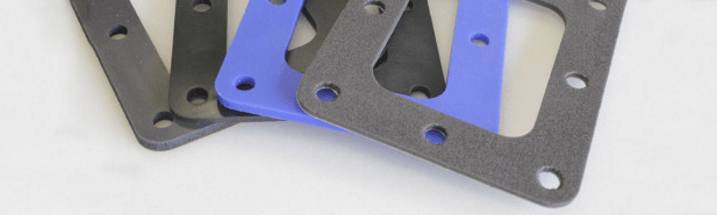
There are always a lot of different factors to consider when deciding on the right gasket material for your application to ensure the best possible performance, as well as longevity. One of the key considerations is where the gasket will be located, for example, will it be used as a weather seal to prevent the […]

When it comes to the manufacturing industry and the components that are required, there’s not always a one size fits all approach. That’s why at CB Frost, we’ve heavily invested in our in-house manufacturing capabilities to provide a wide range of bespoke rubber products. We’ve put together a list of our top five products that […]

At CB Frost we are extremely proud to be an approved supplier to the Ministry of Defence. Supplying the UK’s land and naval services with a range of specialist gasketing, sealing and insulation products certainly helps keep us on our toes as we are required to constantly ensure that every aspect of our business is […]