Sections

Latest News

News 4 Aug 2026

Die-Cut vs. Waterjet Cut Silicone Gaskets

What’s the best choice for your production run? Selecting the right material is critical for manufacturing high-performance seals, but how...

News 23 Jun 2026

Rolling Stock Networking: Connect with CB Frost at RSN 2026

At CB Frost & Co, we don’t believe in waiting around when a great opportunity knocks. That is exactly why...

Extending Railcar Life: How Smart Material Upgrades May Improve Safety, Comfort, Longevity and Compliance

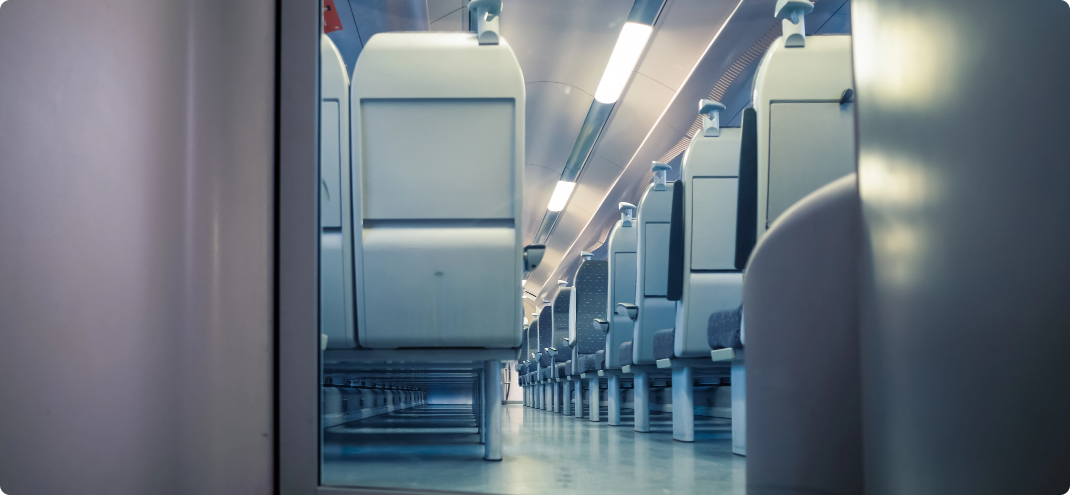
A refurbishment project often begins with a walkthrough of a decades-old train. The seats may have lost their  comfort, or the door seals no longer close tightly. Panels rattle under vibration, and the materials behind them were never designed for today’s safety concerns.

Yet the frame is solid, and the operator’s goal is clear: extend service life while improving performance and compliance.

For design engineers, that means upgrading the materials inside these railcars to meet European modern standards like EN45545-2 without changing the structure or layout of the vehicle. It requires components that fit existing geometries, withstand years of service, and pass the tests that matter: flame spread, smoke density, and toxic gas emissions.

That is where CB Frost comes in. We combine globally trusted materials from Rogers Corporation with local engineering and fabrication expertise to help European refurbishment teams modernise existing fleets efficiently and confidently.

EN45545-2: Modern Standards for Legacy Fleets

EN45545-2 defines how materials must perform in the event of a fire. It categorizes applications by hazard levels (HL 1, HL 2, HL 3) and requirement sets (R 1–R 26) that apply to specific components such as interior panels, seating, and electrical insulation. Materials that achieve HL 3 performance automatically comply with HL 1 and HL 2, giving engineers flexibility and confidence across designs.

Rogers Corporation BISCO® silicones—including HT-800, BF-1000, and MF1®—are tested and approved to EN45545-2 with materials meeting several Requirement Sets R2, R3, R8, R9, R10, R19, R21, R22 and R23 at Hazard Level 3 (HL 3). These materials are trusted across Europe for seating, interior and exterior sealing, and insulation in refurbishment programs where compliance and long-term reliability are non-negotiable.

Technical Snapshot: BISCO® MF1® Silicone Foam

  • Typical Applications: Seating, interior panels, cushioning, vibration isolation
  • Standard: EN 45545-2 R19 and R21 (HL3 compliant for seating applications)
  • Density: 80 – 112 kg/m³ (depending on grade MF1-35 to MF1-75)
  • Compression Set: ≤ 1.5 % (ASTM D 1056, 22 h at 70 °C)
  • Temperature Range: −55 °C to +200 °C
  • Features: Excellent resilience, low smoke and toxicity, durable comfort over years of use

Designing for Long-Term Performance

Material selection determines how long an upgrade truly lasts. In older trains, foam cushions and rubber seals often degrade from heat, compression, and vibration. Over time, they lose recovery, allowing gaps to form or comfort to diminish.

Upgrading to engineered silicone foams solves these issues by maintaining flexibility, compression recovery, and stability even after years of continuous loading and temperature cycling.

  • BISCO MF1 maintains comfort and resilience in seat cushioning and interior panels while meeting the strictest fire-safety standards
  • BISCO® HT-800 offers stable compression and sealing for doors, roof mounts, and HVAC systems, helping prevent water ingress and noise transfer.
  • BISCO® BF-1000 provides a lightweight, flame-retardant option for enclosures and insulation applications.

These materials perform across wide temperature ranges and resist environmental aging, helping operators extend maintenance intervals and lower total lifecycle cost.

Local Fabrication, Faster Turnaround

Refurbishment projects often run on tight schedules. Every additional week a train remains in the depot adds cost and disrupts operations. CB Frost supports these programs with UK-based converting and lamination capabilities, turning certified materials into ready-to-install parts within short lead times.

Our in-house team can reproduce existing parts, modify designs for fit, or laminate pressure-sensitive adhesives for easier assembly. Local stock of EN45545-2 compliant materials ensures that supply keeps pace with refurbishment timelines.

Global Materials. Local Expertise.

The Rogers and CB Frost & Co partnership gives European rail engineers the best of both worlds: Globally proven materials from Rogers —trusted by major OEMs and Tier 1 suppliers—and CB Frost’s local, responsive support to help implement them effectively.

Together, we simplify refurbishment programs, reduce lead times, and ensure that every component meets the highest standards for safety and reliability.

Extending railcar life is not only a matter of maintenance; it is an opportunity to upgrade performance and safety. Replacing outdated foams and seals with high-performance silicones helps fleets meet today’s standards while preparing for another decade of reliable service.

From seat cushions to HVAC seals, our material solutions are engineered for performance, fabricated locally, and built to last.

To discuss your rail needs or for assistance in material selection, talk to our knowledgeable sales team.

Essential Properties Rail Materials Must Have

rail materials

At CB Frost, we stock, supply and convert a wide range of high-performance materials to meet the stringent requirements of the modern Railway industry. The materials used in the construction of rail carriages play a pivotal role in ensuring the safety, efficiency and longevity of the vehicles and carriages. As technical advancements continue to shape the rail industry, understanding the essential qualities that rail materials must possess has become increasingly important.

Having established long-lasting partnerships with Rogers Corporation, a global leader in engineered materials, and Armacell, specialists in producing high-performance insulation materials and technical equipment for the rail industry, we work with the highest quality of special rail materials available.

With our extensive knowledge of specialist materials, rail industry requirements, and converting materials into a wide range of products for sealing, insulation and vibration isolation, CB Frost is here to provide expert advice on material selection and important considerations to make for each rail application.

Rail Products, Materials and Applications

At CB Frost, we supply a wide range of products for rail applications, including:

  • Die cut gaskets and washers
  • Tape/strip for sealing applications
  • Fabrications
  • Rubber mouldings
  • Sponge and rubber extrusions
  • Seat pads
  • Machined plastics

All products are manufactured in house from our wide range of EN45545-2 (European Fire Safety Standard) compliant materials, including:

    • Bisco® HT200 sound block silicone – Acoustic barriers
    • Bisco® HT800 medium silicone foam – Door seals, gap fillers, HVAC seals, LCD display and lighting gaskets, vibration isolation
    • Bisco® BF1000 soft silicone foam – Gap fillers, HVAC seals, LCD display and lighting gaskets, smoke seals
    • Bisco® BF2000 ultra soft silicone foam – Door seals, gap fillers, HVAC seals, LCD display and lighting gaskets, smoke seals,
    • CBF Sil-V0 silicone sponge – Door seals, gap fillers, HVAC seals, LCD display and lighting gaskets, smoke seals,
    • MF1 (55) seating foam – Seat cushioning
    • MF775 (FR8775) silicone rubber – HVAC seals, LCD display and lighting gaskets, rail partitioning
    • LSLT EPDM rubber – Door seals, LCD display gaskets, rail partitioning
    • LSLT neoprene sponge – Gap fillers, LCD display gaskets
    • Rail SD and SDC Insulation foam – HVAC seals 
    • Sustamid (plastic) – Cable Clamps

Our range of high-performance materials for use in the rail industry are selected to provide:

  1. Durability and Longevity – Materials must withstand harsh operating conditions, including temperature fluctuations, moisture, and mechanical wear, ensuring long-term performance without frequent replacements.
  2. Fire Resistance – Compliance with stringent fire safety standards such as EN45545-2 and BS6853 is crucial to protect passengers and equipment in case of fire. Fire safe materials are designed to prevent the spread of fire and smoke through rail vehicles and do not produce toxic fumes when exposed to fire. Our high-performance materials are compliant to EN45545-2, BS6853 Cat 1A and UL94 approved to V-0 and HF-1.
  3. Thermal Insulation – Effective thermal insulation helps maintain temperatures within rail vehicles, not only for the comfort of passengers, but to help enhance energy efficiency for HVAC systems. 
  4. Noise Reduction – As trains travel along rail tracks at high speeds, they can generate high levels of sound, so it’s important that rail materials for sound insulation applications should possess excellent sound absorption properties to minimise noise levels and enhance passenger comfort.
  5. Vibration Damping – Effective vibration damping reduces wear and tear on vehicle components and improves ride comfort for passengers.
  6. Elasticity and Flexibility – Materials need to be elastic and flexible to provide effective cushioning and adapt to various shapes and movements without losing their sealing capabilities.
  7. Environmental Resistance – Materials must be able to resist environmental factors such as UV, Ozone and various weather conditions to maintain their integrity over time.

These qualities ensure that materials used in rail vehicles provide reliable and effective performance for sealing, cushioning, noise reduction, and vibration isolation, enhancing safety, comfort, and efficiency.

Selecting High-Performance Materials

Choosing rail materials with the right qualities is essential for ensuring the safety, reliability, and efficiency of rail systems. Materials that offer durability, longevity, fire resistance, thermal insulation, and effective noise and vibration damping are critical to maintaining the integrity of rail infrastructure and enhancing passenger comfort. 

Selecting the appropriate materials can significantly reduce maintenance costs, minimise downtime related to maintenance and repairs, and comply with stringent safety regulations. As specialists in supplying and converting high-performance materials for a wide range of essential rail applications, we are here to ensure that you get tailored solutions that meet the specific demands of your rail projects.

To discuss your rail industry project needs, contact us today.