Sections

Latest News

News 4 Aug 2026

Die-Cut vs. Waterjet Cut Silicone Gaskets

What’s the best choice for your production run? Selecting the right material is critical for manufacturing high-performance seals, but how...

News 23 Jun 2026

Rolling Stock Networking: Connect with CB Frost at RSN 2026

At CB Frost & Co, we don’t believe in waiting around when a great opportunity knocks. That is exactly why...

Why Choosing the Right EN45545 Gasket is Critical for Rail Industry Safety

In the modern rail industry passenger safety dictates every phase of vehicle design, engineering, and manufacturing. Major structural components, advanced braking mechanisms, and crash-management systems often take the spotlight, but even seemingly minor components within train interiors are absolutely vital for passenger safety during an emergency. One of the most critical, but less talked about elements, in rail interior environments is the EN45545 gasket.

Gaskets are used extensively throughout rail vehicles, from sealing doors and securing windows to isolating HVAC systems, and protecting electrical and lighting enclosures. Whatever the application, it is essential that the right gasket materials are chosen.

  • Critical safety role: While often overlooked, EN45545 gaskets are vital for passenger safety, securing everything from doors and windows to HVAC and electrical systems.  
  • Rail fire hazards: In enclosed rail environments like tunnels, smoke inhalation and toxic fumes are the primary causes of injury. Non-compliant rubber can act as fuel, accelerating fire and creating blinding smoke that blocks evacuation routes.  
  • EN45545-2 standard: Established in 2013, this regulation unifies fire safety by testing materials for fire, smoke, and toxicity. Materials are categorised by Hazard Levels (HL1 to HL3) based on the operating environment.  
  • Consequences of non-compliance: Using non-compliant materials leads to severe legal penalties, vehicle recalls, and lasting brand damage.  
  • Applications: EN45545 gaskets prevent fire from breaching compartments via doors/windows and stop the spread of toxic smoke through HVAC networks.  
  • Expert manufacturing: CB Frost converts high-performance materials (such as Bisco® silicone foams and LSLT EPDM) into precision components that meet stringent HL3 safety benchmarks.

The Unique Danger of Fire in the Rail Environment

Trains are high capacity, enclosed spaces that frequently travel at high speeds through remote areas, lengthy tunnels, or underground networks. In the event of a fire, immediate evacuation is often physically impossible, and this is why material selection is so critical.

During a rail fire, the flames themselves are not the only danger. Statistics consistently show that smoke inhalation and exposure to toxic fumes are the leading causes of injury and fatality in train fire incidents. 

Choosing the wrong rubber gaskets or sealing materials for rail interiors can have catastrophic real-world consequences. Standard, non-rated industrial rubber compounds can act as highly combustible fuel. When exposed to heat or open flame, they can accelerate the spread of the fire and emit thick, lethal, and blinding smoke. This dark smoke quickly obscures emergency lighting and signage, plunging passengers into darkness and severely impeding evacuation routes.

Beyond the threat of fire and smoke spreading, using substandard gasket materials also presents huge compliance and operational problems. Rail manufacturers and suppliers caught using non-compliant parts face heavy legal penalties, costly vehicle recalls, and irreparable damage to their brand reputation.

The EN45545-2 Standard

To combat the specific risks of the rail sector and unify fire safety regulations across European and international railways, the EN45545-2 standard was established in 2013. This safety regulation stringently dictates the fire, smoke and toxicity properties of all materials and components used in railway vehicles.

Under the EN45545-2 directive, materials are rigorously tested and categorised based on their use and the specific Hazard Level (HL1, HL2, or HL3) required for the operating environment of the train. For example, a high-speed sleeper train or a subterranean metro system will require the highest hazard level classification (HL3) due to the extreme difficulty of evacuation.

By selecting fully certified EN45545 gaskets, engineers ensure that the materials will resist ignition, prevent the spread of fire, and drastically limit the release of harmful gases. This critical delay in fire propagation grants passengers and crew the precious minutes needed to evacuate safely.

Key Applications for EN45545 Gaskets

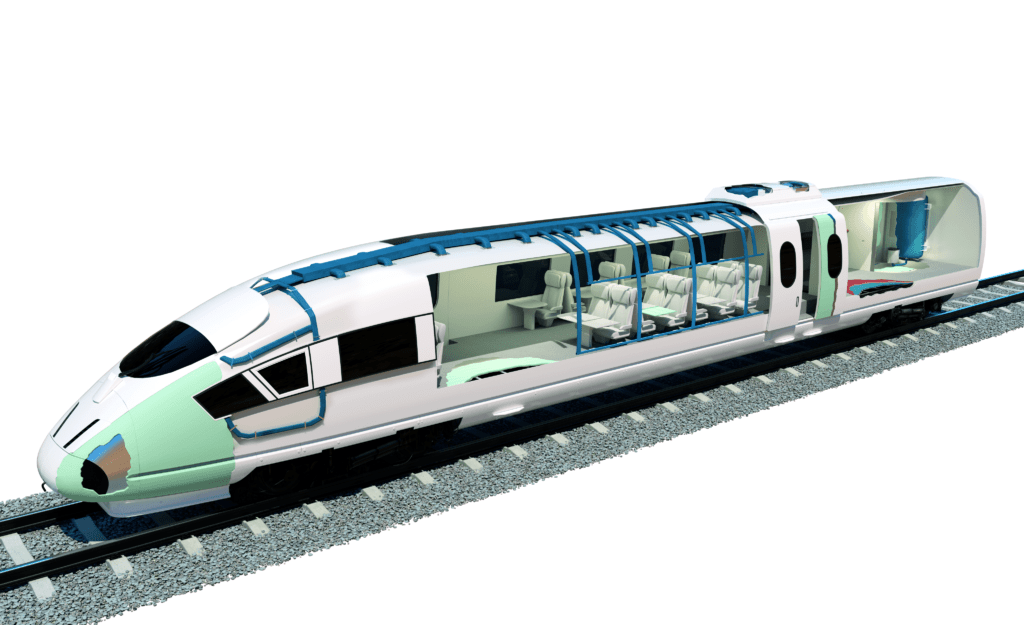
EN45545-2 compliant gaskets are not just used in one specific area; they are integral to the entire anatomy of a train car. Key interior applications include:

  • HVAC systems: Sealing ducting and conditioning units to prevent the rapid spread of toxic smoke through the train’s ventilation network.
  • Door and window seals: Providing weather-tight insulation while ensuring fire doesn’t easily breach passenger compartments.
  • Lighting and electrical enclosures: Preventing localised electrical faults from igniting surrounding panels and materials.
  • Flooring and panelling: Providing vibration dampening and acoustic insulation between interior panels without adding combustible mass.

How CB Frost Delivers Uncompromising Rail Safety

At CB Frost & Co, we know that there is zero room for error or compromise when engineering components for mass transit. As a preferred converter for Rogers Corporation, we are experts in manufacturing fully compliant gaskets from the highest performance, EN45545 compliant materials available on the market, including specialised silicone and EPDM sponges, foams and solid rubbers.

Compliant Rail Materials (EN45545-2)

  • Bisco® HT800 medium silicone foam
  • Bisco® BF1000 soft silicone foam
  • Bisco® BF2000 ultra soft silicone foam
  • CBF Sil-V0 silicone sponge
  • MF1 (55) seating foam
  • MF775 (FR8775) silicone rubber
  • LSLT EPDM rubber
  • LSLT neoprene sponge
  • Rail SD and SDC Insulation foam
  • Sustamid (plastic)

Our experienced team works closely with rail operators, OEMs, and rail interior designers to ensure that every seal, gasket, and extrusion meets the exact specifications and hazard levels of the project. We convert these high performance materials, specifically formulated and independently tested to pass stringent regulatory standards, into precision-cut moulded, extruded, or fabricated components.

From high volumes of die-cut gaskets to custom extrusions and waterjet-cut profiles, our advanced manufacturing capabilities guarantee that your rail interiors are equipped with materials that meet the highest possible safety, durability, and performance benchmarks.

Don’t leave passenger safety or EN45545-2 regulatory compliance to chance. Partner with a manufacturer that truly understands the rigorous demands and life saving importance of the modern rail sector.

Learn more about our dedicated manufacturing capabilities for the rail sector and explore our complete range of compliant materials by visiting our rail industry page.

If you are ready to start on your next rail project, talk to our experienced sales team.
Navigating EN45545-2: Why Silicone is the Gold Standard for Rail Interiors

The CB Frost Guide to Hazard Levels, Fire Safety, and Material Selection for the Rail Industry.

Passenger safety is at the centre of every design decision for the modern rail industry. Since the mandatory adoption of EN45545-2 (the European standard for fire protection on rail vehicles) across Europe in 2016, gasket materials designed for the mass transit sector are a necessity. 

For engineers designing interior applications for rolling stock, including HVAC systems, lighting enclosures, and doors seals, the challenge is finding a material with the necessary balance of mechanical durability and the strictest fire, smoke and toxicity standards required by EN45545-2. With this balance considered, high-performance grades of Silicone rubber, sponge and foam are the clear winner.

To ensure you are selecting the best suited materials for various sealing and cushioning applications within rail interiors, this guide explores why Silicone materials, including the Rogers BISCO® family and MF775 Silicone rubber, are outperforming other gasket materials when it comes to rail industry compliance.

Understanding EN45545-2 Hazard Levels

To select the right rail material for your application, it’s important to understand the classification system. EN45545-2 classifies rail vehicles based on the environment they operate in and the difficulty of evacuation, categorised into Hazard Levels.

  • HL1 & HL2: Hazard Levels 1 and 2 typically apply to standard operation rail vehicles, such as trams or subways, where evacuation is generally straightforward.
  • HL3: This is the strictest category, required for vehicles that operate in tunnels, or environments where evacuation is much more difficult.

The most important thing to remember is that compliance is mandatory. If your interior gasket material fails to meet the relevant EN45545-2 Hazard level for its use, then the entire rail carriage can fail compliance. At CB Frost, we supply Silicone grades specifically formulated to meet these rigorous HL3 requirements.

Silicone Rubber, Sponge and Foam for Rail Applications

The table below features our top Silicone rubber, sponge and foam grades commonly used for rail interiors, outlining their application suitability and compliance.

Material Grade Type Common Applications Compliance
Rogers BISCO® HT800 Silicone Foam (Medium) HVAC Seals, Enclosures, General Sealing EN45545-2 (HL3), UL94 V-0, HF1
Rogers BISCO® BF1000 Silicone Foam (Extra Soft) Low-Closure Force Door Seals, Gap Filling EN45545-2 (HL3), BS 6853, UL94 V-0, HF1
Rogers BISCO® BF2000 Silicone Foam (Ultra Soft) Vibration Isolation, LCD Gaskets EN45545-2 (HL3), BS 6853, UL94 V-0, HF1
MF775 Solid Silicone Solid Rubber (60 Shore) External Gaskets, Heavy-Duty Seals EN45545-2 (HL3), LUL S1085
MF1 Silicone Silicone Foam Seating Cushions, Gap Fillers EN45545-2 (HL3)
CBF Sil-V0 Silicone Sponge LCD Gaskets, HVAC Seals, Door & Window Seals EN45545-2 (HL3), UL94 V-0


Silicone or EPDM for Rail?

Since the introduction of EN45545-2, one of the most common questions we have been asked by Engineers designing new rail vehicles is whether they can use EPDM for its lower cost and weather resistance. Low Smoke Low Toxicity (LSLT) grades of EPDM are EN45545-2 (HL3) compliant and are well suited to some rail applications. However, Silicone rubbers are frequently preferred due to these three distinct advantages:

  • Fire resistance: Silicone naturally self-extinguishes and does not release the toxic smoke associated with standard grades of EPDM or Neoprene. LSLT grades of EPDM are engineered specifically to prevent the release of toxic smoke.
  • Temperature range: Silicone materials for the rail industry function effectively from -55°C to +200°C (and -60°C to +230°C for CBF Sil-V0), ensuring seals do not crack in freezing conditions or melt or deform in high temperatures.
  • Compression set resistance: Materials like HT800 have excellent “memory”, which means they return to their original shape even after years of compression. This characteristic is essential for preventing rattling doors and drafty windows that can be an issue for aging rail carriages.

Common Rail Applications

Silicon rubber, foam and sponge materials are frequently used for rail applications including:

Don’t Gamble with Rail Industry Compliance

When it comes to mass transit, you can’t gamble with compliance. The cost of a failed safety audit, or worse, a safety incident, far outweighs the cost difference between generic rubber and high performance Silicone engineered for the rail industry.

As a preferred converter of Rogers BISCO® materials for over 30 years, we have the materials and expertise to manufacture bespoke gaskets and seals through processes including cutting, extruding, moulding and fabrication.

Need help selecting the right grade of Silicone for your next rail project? Speak to our team today or browse our rubber, sponge and foam materials.

Extending Railcar Life: How Smart Material Upgrades May Improve Safety, Comfort, Longevity and Compliance

A refurbishment project often begins with a walkthrough of a decades-old train. The seats may have lost their  comfort, or the door seals no longer close tightly. Panels rattle under vibration, and the materials behind them were never designed for today’s safety concerns.

Yet the frame is solid, and the operator’s goal is clear: extend service life while improving performance and compliance.

For design engineers, that means upgrading the materials inside these railcars to meet European modern standards like EN45545-2 without changing the structure or layout of the vehicle. It requires components that fit existing geometries, withstand years of service, and pass the tests that matter: flame spread, smoke density, and toxic gas emissions.

That is where CB Frost comes in. We combine globally trusted materials from Rogers Corporation with local engineering and fabrication expertise to help European refurbishment teams modernise existing fleets efficiently and confidently.

EN45545-2: Modern Standards for Legacy Fleets

EN45545-2 defines how materials must perform in the event of a fire. It categorizes applications by hazard levels (HL 1, HL 2, HL 3) and requirement sets (R 1–R 26) that apply to specific components such as interior panels, seating, and electrical insulation. Materials that achieve HL 3 performance automatically comply with HL 1 and HL 2, giving engineers flexibility and confidence across designs.

Rogers Corporation BISCO® silicones—including HT-800, BF-1000, and MF1®—are tested and approved to EN45545-2 with materials meeting several Requirement Sets R2, R3, R8, R9, R10, R19, R21, R22 and R23 at Hazard Level 3 (HL 3). These materials are trusted across Europe for seating, interior and exterior sealing, and insulation in refurbishment programs where compliance and long-term reliability are non-negotiable.

Technical Snapshot: BISCO® MF1® Silicone Foam

  • Typical Applications: Seating, interior panels, cushioning, vibration isolation
  • Standard: EN 45545-2 R19 and R21 (HL3 compliant for seating applications)
  • Density: 80 – 112 kg/m³ (depending on grade MF1-35 to MF1-75)
  • Compression Set: ≤ 1.5 % (ASTM D 1056, 22 h at 70 °C)
  • Temperature Range: −55 °C to +200 °C
  • Features: Excellent resilience, low smoke and toxicity, durable comfort over years of use

Designing for Long-Term Performance

Material selection determines how long an upgrade truly lasts. In older trains, foam cushions and rubber seals often degrade from heat, compression, and vibration. Over time, they lose recovery, allowing gaps to form or comfort to diminish.

Upgrading to engineered silicone foams solves these issues by maintaining flexibility, compression recovery, and stability even after years of continuous loading and temperature cycling.

  • BISCO MF1 maintains comfort and resilience in seat cushioning and interior panels while meeting the strictest fire-safety standards
  • BISCO® HT-800 offers stable compression and sealing for doors, roof mounts, and HVAC systems, helping prevent water ingress and noise transfer.
  • BISCO® BF-1000 provides a lightweight, flame-retardant option for enclosures and insulation applications.

These materials perform across wide temperature ranges and resist environmental aging, helping operators extend maintenance intervals and lower total lifecycle cost.

Local Fabrication, Faster Turnaround

Refurbishment projects often run on tight schedules. Every additional week a train remains in the depot adds cost and disrupts operations. CB Frost supports these programs with UK-based converting and lamination capabilities, turning certified materials into ready-to-install parts within short lead times.

Our in-house team can reproduce existing parts, modify designs for fit, or laminate pressure-sensitive adhesives for easier assembly. Local stock of EN45545-2 compliant materials ensures that supply keeps pace with refurbishment timelines.

Global Materials. Local Expertise.

The Rogers and CB Frost & Co partnership gives European rail engineers the best of both worlds: Globally proven materials from Rogers —trusted by major OEMs and Tier 1 suppliers—and CB Frost’s local, responsive support to help implement them effectively.

Together, we simplify refurbishment programs, reduce lead times, and ensure that every component meets the highest standards for safety and reliability.

Extending railcar life is not only a matter of maintenance; it is an opportunity to upgrade performance and safety. Replacing outdated foams and seals with high-performance silicones helps fleets meet today’s standards while preparing for another decade of reliable service.

From seat cushions to HVAC seals, our material solutions are engineered for performance, fabricated locally, and built to last.

To discuss your rail needs or for assistance in material selection, talk to our knowledgeable sales team.

How MF775 Silicone Rubber Contributes to the Rail Industry

In the rail industry, MF775 silicone rubber isn’t just a material, it’s a critical safety component.

The modern rail infrastructure demands materials that are not only durable and high-performing but, most importantly, fire-safe. In the event of a fire, materials used in rail vehicles must limit the spread of flames, smoke, and toxic fumes to ensure passenger safety. Since 2016, it has been mandatory for all materials and components in railway vehicles to meet EN45545-2, the European standard for fire safety in the rail industry. 

MF775 is a high-performance, solid silicone rubber specifically engineered to meet these stringent fire safety standards, making it an important material in a wide range of critical rail applications. Its unique properties allow it to contribute to safety, reliability, and longevity in rail vehicles.

MF775

Key Applications of MF775 in the Rail Industry

MF775 silicone rubber is a versatile material used in various parts of a train’s interior and exterior, providing both safety and performance benefits.

Door and Window Seals

Door seals are crucial for preventing drafts, water ingress, and noise. In a fire, they are also a vital barrier to prevent the spread of fire and smoke. MF775 is an ideal material for door and window seals and gaskets due to its excellent long-term durability and resistance to weathering and UV light. It maintains its sealing properties over a wide temperature range (-55ºC to +200°C) and, most importantly, complies with the strict fire safety regulations for interior rail components.

HVAC Seals

HVAC systems in trains rely on effective seals to ensure efficient temperature control and air quality. MF775 silicone rubber is used for seals and gaskets within these systems, preventing the leakage of conditioned air while withstanding constant temperature fluctuations and vibration. Its flame-retardant properties are critical in an area with complex electrical and mechanical components.

LCD Display Gaskets

Modern trains are equipped with numerous LCD displays for passenger information. These displays require gaskets to protect sensitive electronics from moisture and dust. MF775 is the perfect choice for these gaskets because of its excellent electrical insulation properties and its ability to maintain a reliable seal. Its fire-safe nature is a key consideration for electronics located in passenger areas.

Light Enclosure Gaskets

Interior and exterior lighting on trains must be sealed against the elements to ensure longevity and functionality. MF775 is used to create gaskets for light enclosures, providing a durable barrier against moisture, dirt, and dust. The material’s resistance to UV radiation prevents degradation from sunlight, ensuring the seals remain effective as long as the train is in action.

Partitioning

In some railcar designs, MF775 is used as a gasket or sealing strip in interior partitions. This helps to reduce noise transmission between compartments and provides a fire-resistant barrier. The ability of the material to be supplied in various forms, such as sheets or strips, makes it a flexible solution for complex partitioning requirements.

Essential Properties of MF775 Silicone Rubber

The widespread use of MF775 in the rail industry is a testament to its exceptional properties:

  • EN45545-2 compliance: This is the most critical feature. It is a European standard that sets the fire safety requirements for materials used in rail vehicles. The material is formulated to have low flammability, produce minimal smoke, and emit low levels of toxic gases in a fire, which are all essential for passenger safety in a confined space. MF775 is also approved to fire safety standards BS6853 Cat 1A and UL94 V-0 / HF-1.
  • High temperature resistance: MF775 operates reliably across a broad temperature range, from -55°C to +200°C, making it suitable for both internal HVAC systems and components exposed to external temperature extremes.
  • Excellent environmental resistance: Like other high-quality silicones, MF775 is highly resistant to UV light, ozone, and general weathering, ensuring its physical properties don’t degrade over time due to environmental exposure.
  • Durability and longevity: The material has a high compression set resistance, meaning it maintains its shape and sealing force even after long periods of compression, guaranteeing a long-lasting and reliable seal.

MF775 is a crucial component in the design and manufacture of modern rail vehicles. Its unique blend of fire safety compliance, environmental resistance, and durability makes it an ideal choice for a variety of critical applications, from door seals to HVAC systems. By choosing MF775, manufacturers not only enhance the performance and longevity of their trains but, most importantly, significantly contribute to the safety and well-being of passengers.

Buy MF775 Sheets

You can buy MF775 silicone rubber sheets directly from our online shop, with a width of 600m and a choice of thicknesses between 1mm and 6mm, and in 1 or 2m lengths, plain or adhesive backed.

At CB Frost & Co, we also have the manufacturing capabilities to produce bespoke gaskets, strips and washers, as well as custom extruded, moulded and fabricated silicone rubber products. Discuss your needs with our experienced sales team.
 

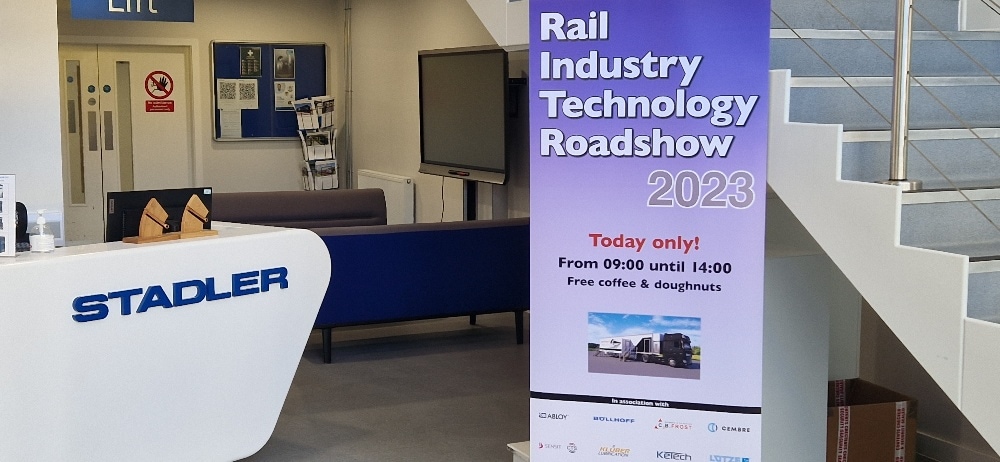
Success at the Rail Industry Technology Roadshow

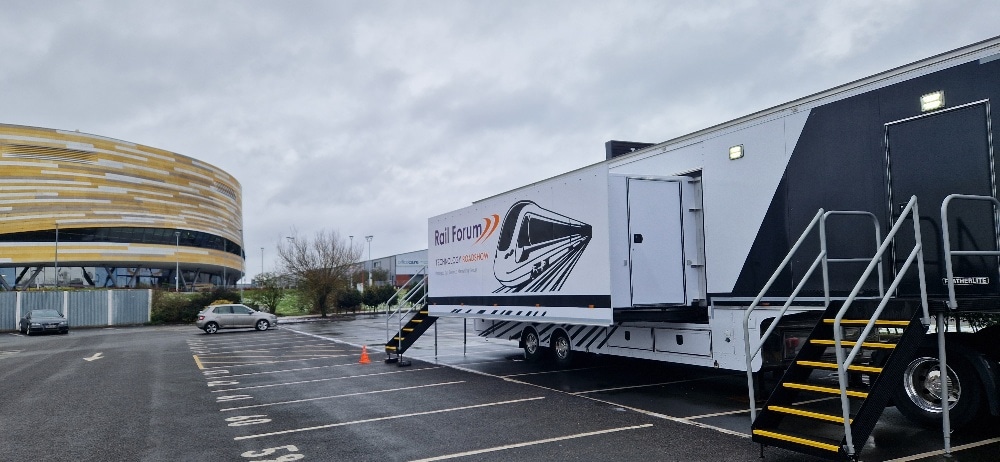
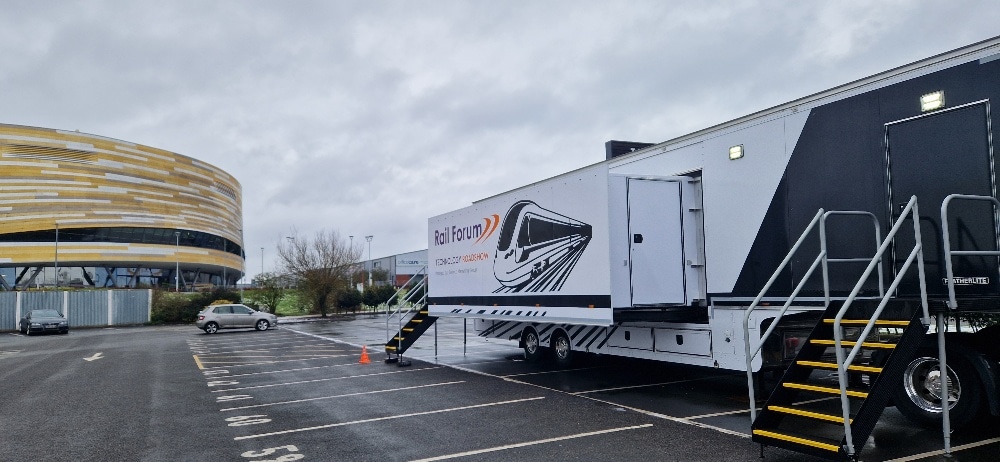
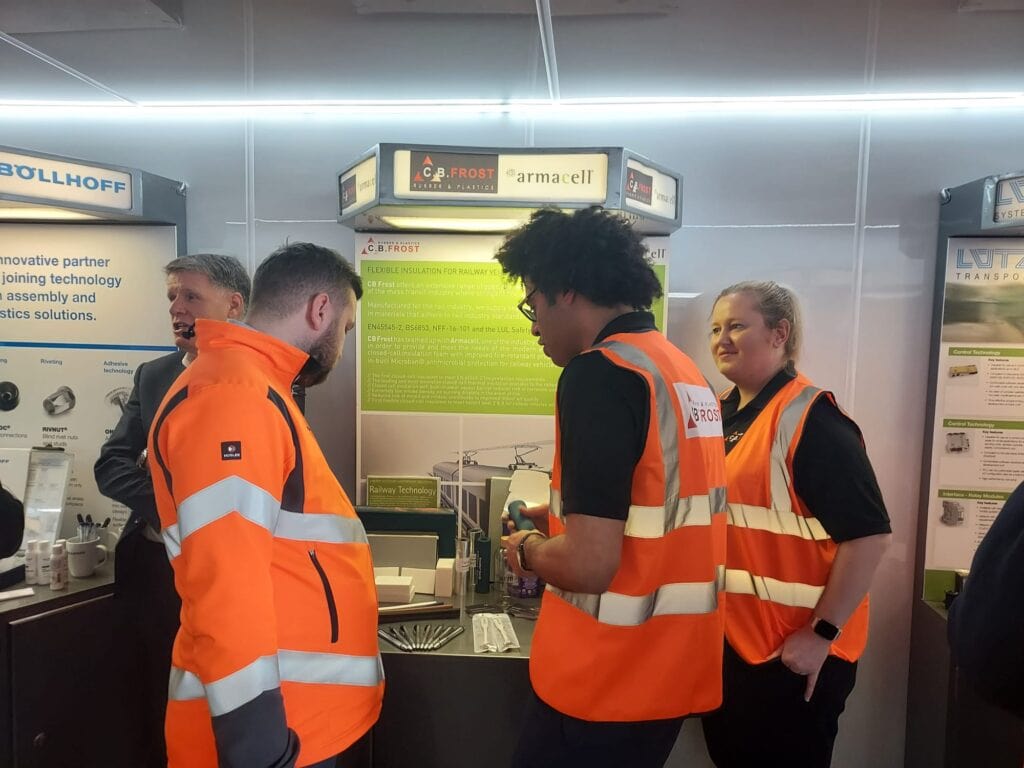
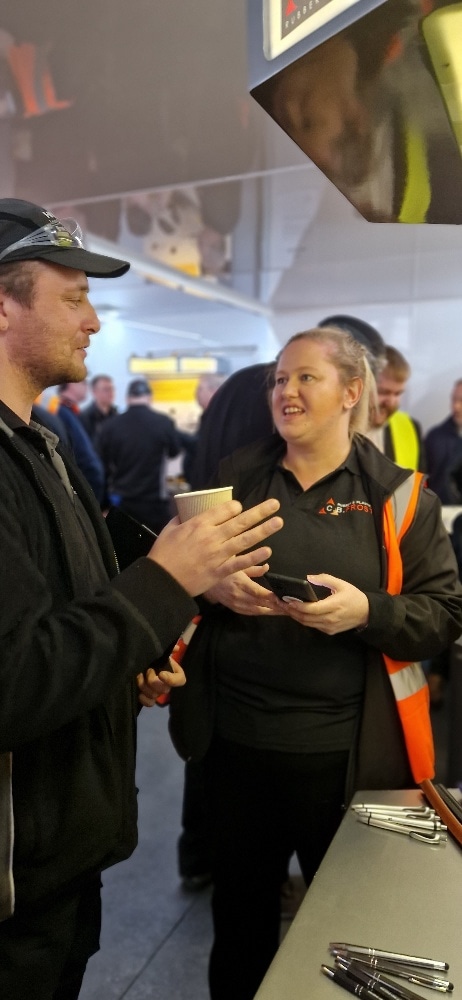
March has been a busy month for CB Frost, with members of our sales team representing us at the Rail Industry Technology Roadshow. The two week long exhibition, supported by Rail Forum and facilitated by Brewco Marketing Group, visited a number of prominent rail industry sites throughout England. As a roadshow, even the exhibition space, a state of the art trailer, was transported around the country from location to location.

In addition to a number of closed events specifically for rail industry site staff, the roadshow also included open events at Pride Park (Derby), Siemens (Goole) and Network Rail (Milton Keynes), where members of the public were invited to learn more about innovations in rail industry technologies. 

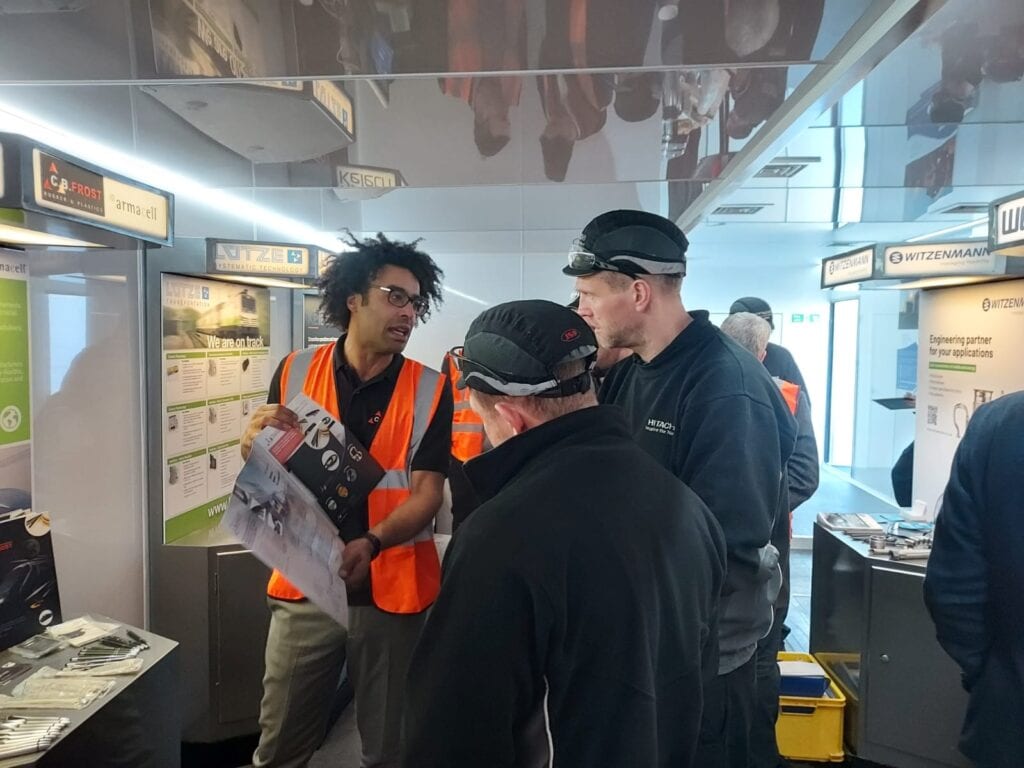
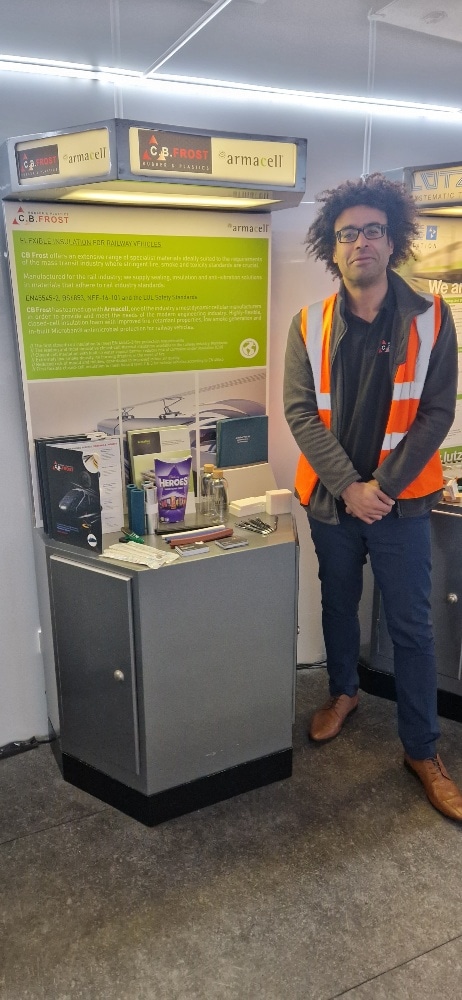
As a specialist supplier and converter of a range of high performance rubber, sponge and foam materials for the rail industry, CB Frost exhibited throughout the roadshow, displaying our extensive range of materials to a wide range of rail industry equipment manufacturers. As a preferred UK distributor of Armacell’s range of Armaflex Rail SD insulation materials and a converting producer of Rogers’ Corporation’s BISCO cellular silicone materials, we showcased high performance materials for a wide range of rail applications.

Rail Industry Technology Roadshow 2023

Taking place for the first time since 2019, this year’s Rail Industry Technology Roadshow was a great success for us, providing the opportunity to showcase our catalogue of EN45545-2 materials and speak to over 300 people. We also obtained more than 500 contacts over the two weeks of the exhibition and have already received five enquiries and three non-disclosure agreements to receive additional enquiries.

During the open event at Siemens, Goole, Business Development Manager Daniel Brock shared his thoughts on the event with BBC Radio Humberside – which you can listen to here at the 1hr57 mark.

“As an SME, it’s a great way to showcase our manufacturing capabilities to the large OEMs around the country.

“Last week alone when we were on site at one of the locations, we had over 250 visitors on the day and it was absolutely manic, but brilliant because we are getting to speak to the key decision makers and the people actually handling our products on a day to day basis.”

Sales Coordinator Charlotte Homer was also very pleased with the opportunities presented by exhibiting at the roadshow.

“I was over the moon with the amount of interest we received when showcasing our products and capabilities at the Rail Technology Road Show.

“It was a great opportunity to meet new people (and put faces to names) and hear the valuable feedback on out products. Overall, it was a fantastic event that I was proud to be a part of!”

CB Frost and the Rail Industry

CB Frost has long worked with a wide range of rail industry clients, supplying materials for major rail projects including the Victoria line Underground, Sub Surface Lines and Electro star, along with recent experience working on HSR, Metro and Tramway projects. In order to meet vital industry safety standards, our range of materials comply with EN45545-2 standard for fire safety, BS6853, NFF-16-101 and LUL safety standards.

For more information on our high performance rail materials or to discuss your rail industry project, please call our sales team on +44 (0)121 773 8494.

High Performance Silicone Foam for Rail Applications

Partnered with leading cellular silicone manufacturers, Rogers Corporation and Armacell, and utilising decades of experience in converting rubber and plastic materials, CB Frost has earned a reputation as a leading supplier of silicone foam and rubber for the Rail and Mass Transit Industry, providing materials for a wide range of applications, from door seals to seat cushions.  

What is EN45545-2?

In order to supply to the rail industry, our extensive range of rail insulation materials and products must meet the most stringent rail industry requirements for fire safety, smoke and toxicity. As well as remaining effective over a wider temperature range than most cellular silicones, our silicone foam materials comply with important industry standards, including BS6853, LUL (London Underground), NFF-16-101 and EN45545-2.

EN45545-2 is the European standard for the highest level of safety in the rail industry. As of 2018, tighter requirements have been put in place, requiring all materials and components for railway vehicles (including interior surfaces, seats and seals) to be tested to EN45545-2 standards. The key parameters of testing include ignitability, flame spread, heat release, smoke opacity and smoke toxicity. 

Our rail industry customers can rest assured that all specialist rail materials and products that we supply are comprehensively tested to ensure they comply with EN45545-2, along with a range of other industry standards.

The advantages of Silicone Foam for Rail Vehicles

Cellular silicone rubber and silicone foam are widely considered the most effective materials for a range of applications within rail vehicles due to their excellent resistance qualities that ensure long term reliability for sealing, cushioning and safety:

Flame retardancy and low smoke toxicity – As discussed, silicone foam materials for the rail industry are thoroughly tested for flame retardancy and low smoke toxicity under the European standard. As a result, they offer a safe and effective solution for many applications within rail vehicles.

Environmental resistance – Certain grades of silicone foam maintain excellent resistance to ozone and UV light and remain effective within a wide temperature range, making them ideal materials for protecting and sealing outdoor rail applications.

Compression set and sealing ability – Silicone foams also feature excellent compressibility, memory and low stress relaxation, and softness. These characteristics are advantageous for sealing and vibration isolating applications, as well as helping to provide comfort to rail passengers.

Common rail applications for EN45545-2 foam materials include:

Door Seals

The compressibility, low weight, softness and memory of BF2000 silicone foam makes it a highly suitable material for gap filling and door sealing applications within rail vehicles.

Gap Fillers

The softness, compressibility and durability of BF1000 and BF2000 silicone foams ensure that they can effectively fill and seal gaps of variable shapes and sizes.

HVAC Seals

The excellent memory, low stress relaxation and compressibility, combined with temperature range, make BF1000 and BF2000 foams ideal HVAC sealing materials, helping to reduce maintenance costs related to gasket failures.

LCD Display and Lighting Enclosure Gaskets

Silicone materials such as BF1000 and BF2000 are highly effective in protecting against the penetration of dust, moisture, air and light, providing an effective seal for LCD displays and lighting enclosures.

Seating Cushions

MF1-55 is a foam material designed to suit a wide range of cushioning applications. Tested to rail fire safety standards, it is widely fabricated for use in seating cushions, providing comfort and safety for rail passengers.

Smoke Seals

The compression set and resistance capabilities of MF1-55, BF1000 and BF2000 are well suited to smoke sealing applications, preventing the spread of smoke through rail vehicle ceiling and panel compartments.

rail industry

High Performance Rail Industry Materials

For high performance rail industry materials that comply with EN45545-2, BS6853, NFF-16-101 and London Underground safety standards, contact CB Frost. All materials are available in rolls, sheets, pads, gaskets or fabrications. 

Call +44 (0)121 773 8494 to discuss your needs and our experienced team will be happy to help you select the ideal material for your application.