Sections

Latest News

News 4 Aug 2026

Die-Cut vs. Waterjet Cut Silicone Gaskets

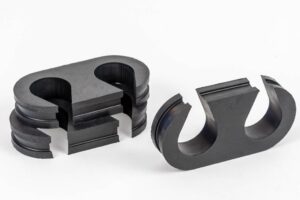
What’s the best choice for your production run? Selecting the right material is critical for manufacturing high-performance seals, but how...

News 23 Jun 2026

Rolling Stock Networking: Connect with CB Frost at RSN 2026

At CB Frost & Co, we don’t believe in waiting around when a great opportunity knocks. That is exactly why...

CB Frost in 2022: Electric Vehicles and More

As we enter the new year, it provides an ideal opportunity to reflect on the events of the year that just passed. Whilst 2020 and 2021 saw us face certain restrictions as a result of COVID-19 as businesses in all industries continued to face the long term effects of the pandemic, 2022 was a year that saw CB Frost enter new markets such as electric vehicles, along with winning new contacts in existing markets.

Let’s look at some of what we achieved in 2022, along with some of the key topics we covered in our blog posts.

Entering the Electric Vehicles Market
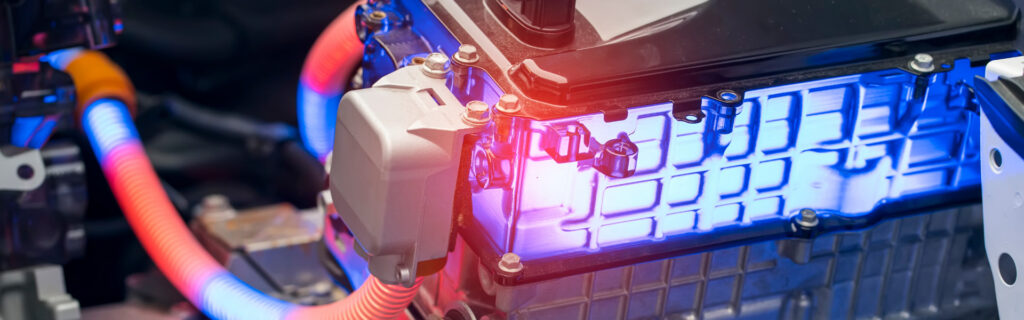
ev battery

With the number of electric (EV) and hybrid (HEV) vehicles on the road rapidly increasing, in 2022 we teamed up with Rogers’ Corporation to supply a range of products for Lithium-ion battery packs for EV and HEV vehicles. With access to Rogers’ range of specialist materials for EV batteries, combined with our expertise in manufacturing, we have been able to develop high performance products for applications including 

  • Pressure management pads
  • Battery housing seals
  • Cooling plate spring pads
  • Manual service disconnect seals
  • Thermal runaway protection pads
  • Anti vibration and cushioning pads

With the return of trade shows and expos in a physical capacity, we were excited to showcase Rogers’ Corporation’s range of PORON® polyurethanes and BISCO® silicone materials, along with our range of EV battery components. Two key events we attended included the Battery tech Expo at Silverstone, and the Battery Cell and Systems, and Vehicle Electrification Expos at the NEC, Birmingham.

Attending these events provided our team with the chance to explore the scope of battery technology innovations, along with making new contacts and discussing our own range of materials and EV battery products.

Supporting the Ministry of Defence

CB Frost have long been a supplier to the Ministry of Defence, working alongside well-known names in the defence industry, including Babcock Defence, BAE and General Dynamics. In May 2022, we were pleased to sign a new £60k contract to supply the MoD.

Following more than 12 months of hard work by CB Frost Business Development Manager Daniel Brock and Sales Coordinator Charlotte Homer, we were awarded a long term contract from the MoD to support the British Army. Under our new contract, we supply a range of rubber products for the MoD’s UK armoured vehicle programme. The Boxer is a state-of-the-art armoured vehicle offering the highest levels of protection whilst maintaining fantastic mobility.

Our Material Range and Manufacturing Capabilities

As well as providing news on new developments for CB Frost and the industries that we supply, our blog also provides a platform to highlight our extensive range of high performance materials, designed to meet the requirements and regulations of many industries.

To help our customers in selecting the best suited materials for their applications, we discussed the key advantages of our range of foam rubber products, as well as taking a more detailed look at our high performance silicone materials for the rail industry, and highly versatile PORON® Urethane materials.

As experts in the conversion of rubber, sponge and plastic materials, in addition to providing our expertise in helping customers select the right materials for their needs, we also deliver the highest quality of manufacturing services, converting our impressive range of materials into products to meet the needs of our clients. 

During 2022, we made the most of our website’s blog to highlight our manufacturing knowledge and experience, sharing our rubber moulding advice and why to choose injection or compression moulding. We also profiled our extrusion and fabrication capabilities, discussing the processes involved in rubber extrusion and fabrication processes.
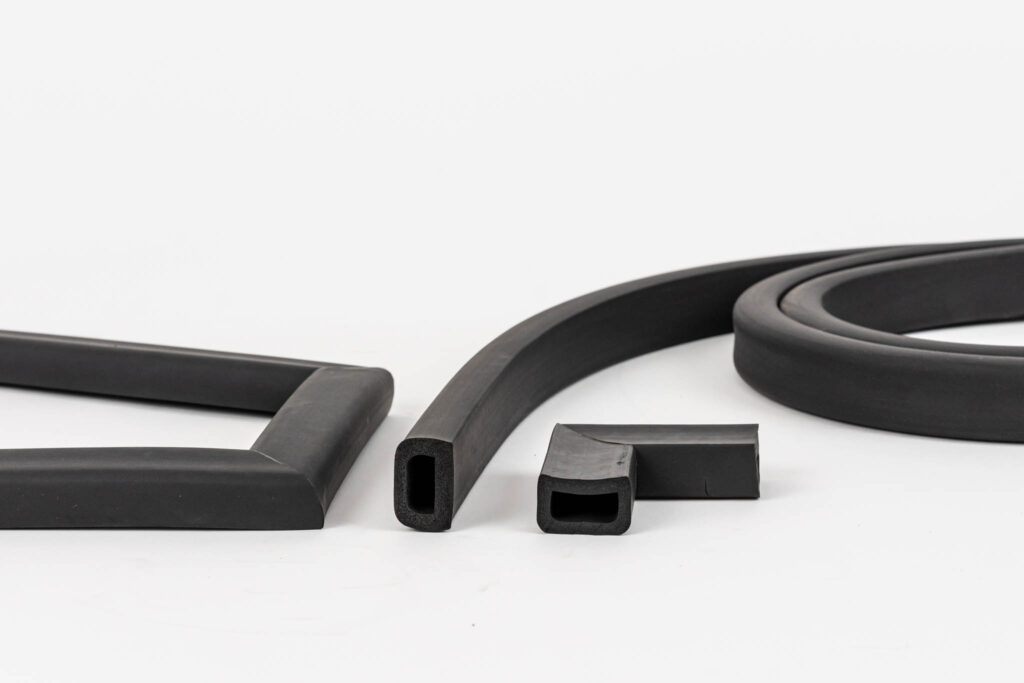
rubber extrusions

Looking Forward to 2023 and Beyond

We believe that a key element contributing to our century plus existence as a company is our forward thinking approach. In addition to learning from the lessons offered by the challenges we have faced each year in the history of CB Frost, we always have our fingers on the pulse of each industry we supply and work tirelessly to not only keep up with industrial advancements, but understand how technologies and processes will continue to advance in the years to come. 

To discuss your future needs and learn more about our extensive range of high performance materials and manufacturing capabilities, contact our team today by calling 0121 773 98494.

Rubber Moulding: Injection Moulding or Compression Moulding?

Over the decades, we have gained significant expertise in rubber moulding processes. With our extensive catalogue of materials, we supply moulded rubber parts in a range of commercial materials, along with industry specific grades, ensuring that our customers can choose the best material to suit their application. 

Our team is always on hand to help you select suitable moulding materials to meet industry standards including EN45545-2, and BS6853 fire safety standards for the rail industry, along with other industry standards such as military grade, WRAS and FDA.

rubber moulding

At CB Frost, as experts in the conversion of a wide range of rubber materials and polymers, we also manufacture tooling to suit each application, from prototypes to small batches, or multicavity rubber moulds for large scale and long running schedules. Depending on the customer requirement, we use both injection moulding and compression moulding processes to produce rubber moulded components. As well as helping you to select the best suited materials, we will also advise on the moulding production process that best fits your needs.

Injection Moulding

Injection moulding obtains moulded rubber parts by injecting molten rubber or plastic materials into a metal, hollowed out mould. Once enough of the molten material is injected into the mould, it is then cooled in order to allow the material to set into the intended moulded shape.

There are many advantages to choosing the injection moulding process, including:

  • Injection moulding is well suited to producing small and large, simple and intricate parts.
  • A wide range of materials can be selected for this moulding process.
  • The injection process ensures that the molten material fills the mould evenly to produce extremely consistent results, reducing the likelihood of component failure. A further advantage of this consistency is that rubber mouldings rarely need extra finishing or trimming once they are removed from the mould cavities, making for a highly efficient process.
  • Compared with other manufacturing processes, there is very little waste associated with injection moulding, as only the necessary amount of material is injected into rubber moulds.
  • Whilst injection moulding can be used for short production runs, it is extremely well suited to long runs as moulded parts can be manufactured in faster cycles than other moulding methods and the process can be automated, allowing for parts to be produced effectively in mass in a short period of time. Thousands of parts can be moulded before tools require maintenance or replacement.

Needless to say, whilst there are many advantages to injection moulding, factors such as tooling cost and the design of moulded components must be considered.

Compression Moulding

The compression moulding process works by placing pre-weighed raw rubber or plastic materials into the moulding cavities of a pre-heated tool (mould). Once the desired quantity of raw material is added to the cavities of the mould, it can then be closed so that heat and pressure can be applied in order to start the moulding process. Once the rubber mouldings are set (cured), the mould can be opened and the part removed.

Some of the key advantages of compression moulding include:

  • As the compression moulding process is simpler than injection moulding, the tooling is less complicated and therefore, lower in cost and can be manufactured from lower cost grades of aluminium or steel, providing they can withstand the pressure of the compression moulding process.
  • As a result of cheaper tooling, compression moulding is useful for shorter production runs and for prototyping where injection moulding may not be as cost effective.
  • If you are in need of a moulding process to produce large, bulky moulded parts, then compression moulding is ideal. As the raw materials are loaded directly into the mould cavity, there is less limit to the weight of the part that can be manufactured.

When considering compression moulding, whilst there are many benefits, you may find that this is not the best suited process if you are seeking to reduce waste and labour cost, require fast processes for long production runs, or wish to manufacture complex moulded parts.

Rubber Moulding Advice

To ensure you make the right choices when choosing the best suited materials and processes for creating rubber mouldings to meet your specifications, contact our expert team today. As suppliers and converters of an extensive list of material grades, with experience in manufacturing parts for customers in many industries, we can help you make the right decisions.

Call us on 0121 773 8494 to talk about your moulding needs.